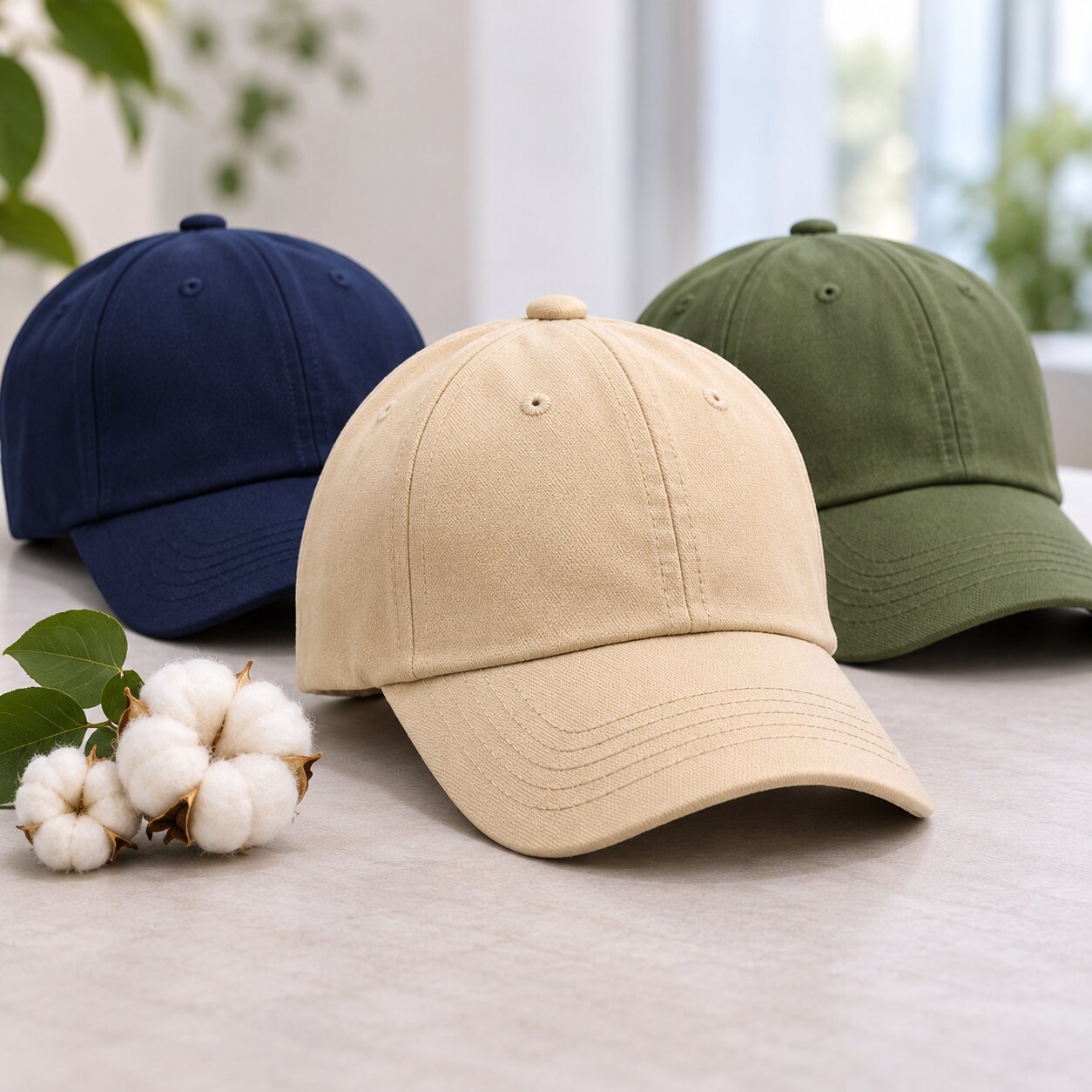
A cotton cap can feel soft in a product photograph yet become hot, tight, slow-drying or misshapen after a few wears. By the end, you will know which fibre, construction, fit, care and testing details to specify, and how to judge whether cotton suits your intended users.
Key takeaways
- Request fibre content, GSM, weave, finish and yarn count before comparing suppliers.
- Match crown depth, brim shape and closure to the wearer and intended activity.
- Test shrinkage, colourfastness, seam strength and embroidery after repeated washing.
- Convert the use case into a written bulk cap specification before requesting quotes.
Specify the Cotton Fabric Before You Compare Suppliers
A cap labelled cotton can feel cool and soft or stiff, sweaty and misshapen. Before comparing suppliers, specify fibre content, weave, fabric weight GSM, finish and yarn count; these details control breathability, abrasion resistance, embroidery stability and crown shape.
| Fabric option | Comfort and shape effect | Ask supplier to state |
|---|---|---|
| 100% cotton twill | Breathable, durable and easier to embroider; medium-weight twill holds a useful shape | Twill direction, yarn count and finished GSM |
| Cotton poplin | Smooth and light, but less resistant to abrasion and crown collapse | Weave density and reinforcement for the front panels |
| Cotton canvas | Firm and highly shape-retentive, but warmer and less pliable | Canvas weight, softness treatment and intended climate |
| Brushed cotton | Softer against skin and less sharp in appearance; brushing can increase heat retention | Brushing method, pilling resistance and shrinkage limit |
Specify a 100% cotton caps fibre tolerance, or name the exact cotton blend percentage. A cotton blend with polyester dries faster, while untreated cotton absorbs perspiration and dries slowly; cotton’s moisture regain is roughly 7–8.5%.
- State whether the fabric is brushed or unbrushed and give its finished fabric weight GSM.
- Request the yarn count, colourfastness requirement and shrinkage limit after washing.
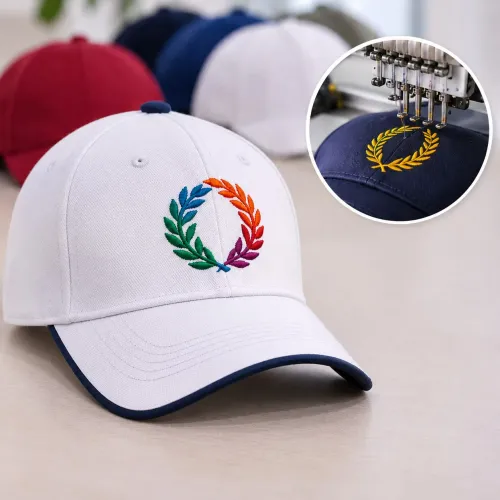
- Match embroidery density and backing to the fabric; heavy stitching on lightweight cotton puckers the crown. Approve a sewn strike-off on the actual cap, not a flat fabric swatch.
- Specify the sweatband fibre separately: cotton absorbs sweat, polyester dries faster, and foam adds cushioning but retains heat.
Match the Construction and Fit to the Wearer
Evaluate a cap on a worn sample, checking internal pressure, sweat handling, crown support and adjustment—not the cotton shell alone.
A six-panel cotton cap distributes seams evenly, but bulky seam joins or stiff taping can create pressure points during commuting or walking. Compare an unstructured cap with a structured crown: the first flexes with your head and packs easily; the second holds its shape but can press against the forehead.
Check the visor material, crown depth and smoothness of each eyelet from inside.
Use this inspection checklist on the actual finished cap:
- Wear it for at least 20 minutes and look for forehead marks, crown pressure, rough seams or a visor that blocks vision.
- Touch the sweatband material against your skin. Cotton absorbs perspiration but dries slowly; polyester dries faster, while foam can feel warmer and retain pressure.
- Bend the crown and visor. Excess stiffness, seam bulk or inadequate seam taping will become more noticeable during repeated wear.
- Review any embroidery strike-off on the cap itself. Dense stitching on lightweight cotton can pucker the panel and create a rigid patch.
Measure your head with a soft tape above the eyebrows and ears, keeping it level. Choose a stated circumference range that places your measurement near the middle, not at either extreme.
| Closure | Fit behaviour | Best use |
|---|---|---|
| Hook-and-loop | Fast, forgiving adjustment; may catch hair | Shared or frequently resized caps |
| Metal buckle | Precise, durable adjustment | Uniform and daily outdoor wear |
| Plastic snapback | Quick stepped adjustment | Casual use and team distribution |
| Elastic | Smooth, low-profile fit | Limited-size programmes; verify it does not loosen over time |
Choose Cotton for the Right Kind of Everyday Use
Cotton is the better everyday choice when softness, low heat retention and a natural hand feel matter more than rapid drying. A breathable cotton cap suits commuting, walking, school wear and light promotional use, especially in mild or dry conditions. Its drawback is moisture: cotton absorbs perspiration but dries more slowly than most synthetics.
| Fabric | Choose it when | Trade-off |
|---|---|---|
| Cotton | You want soft skin contact, quiet comfort and a less technical appearance | It holds moisture and can lose shape if poorly constructed |
| Polyester | You need quick drying, colour retention or repeated outdoor use | A polyester cap comparison reveals a warmer, less absorbent feel for some wearers |
| Canvas | You need a firm, abrasion-resistant cap for rugged workwear | A canvas cap feels heavier and stiffer, with less airflow |
| Nylon | You need low weight, weather resistance and fast drying | Nylon can feel slick and retain heat in direct sun |
| Performance mesh | You need maximum ventilation during exercise, hot-site work or summer events | Mesh offers less sun coverage and a less polished everyday appearance |
| Cotton-polyester blend | You want cotton’s hand feel with better drying, shape retention and durability | The synthetic content reduces cotton’s softness and absorbency |
Choose 100% cotton for comfort-led daily wear, not for heavy sweat or rain. Choose a blend when one cap must cover commuting, active use and frequent washing. For outdoor work, compare fabric weight, weave and ventilation rather than assuming any cotton cap performs alike.
Test Washing, Colourfastness and Long-Term Durability
“Pre-shrunk” does not mean zero shrinkage. Agree a dimensional tolerance and verify it after the laundering method the wearer will actually use; AATCC TM135 measures dimensional change in home laundering.
Your cotton cap washing instructions should state:
- Water temperature and detergent type
- Hand washing or machine-cycle limits
- Whether bleach, soaking and fabric softener are prohibited
- Air-drying, tumble-drying and ironing instructions
- How to reshape the crown and visor while damp
A cap that loses its circumference, crown depth or visor shape after washing is not durable, even if its fabric remains intact. Record measurements before washing and after the agreed number of cycles, then inspect the sweatband, seam taping, eyelets, closure and embroidery for distortion or thread pull-out.
Request AATCC TM15 colourfastness testing for perspiration exposure, especially where the cap will contact skin during outdoor work. Also test laundering durability separately with AATCC TM61 accelerated laundering; passing one test does not prove the other. Compare the washed cap against an approved colour standard, not memory or a screen image.
Test embroidery on the actual curved cap, because excessive stitch density can pucker lightweight cotton while inadequate backing can loosen edges. If sun protection matters, request a UPF result based on AATCC TM183; cotton fibre or dark colour alone proves nothing.
A retained sample from each production lot makes later shrinkage, fading and construction failures easier to trace.
Turn the Use Case Into a Bulk Cap Specification
For custom cotton caps, a usable specification starts with quantities that every supplier will price the same way: state total decorated caps, not merely blank-cap quantity, and attach a size-and-colour breakdown. Include the delivery date and destination separately from product requirements.
- Name the shell: 100% cotton or blend, weave, fabric weight in GSM, brushed or unbrushed finish, and allowable fibre-content tolerance. State whether the sweatband contains cotton, polyester or foam, then specify panel count, crown depth, visor material, seam taping, eyelet type and structured or unstructured construction.
- Record each decoration location, maximum dimensions, artwork file, thread or print colours and the cap embroidery specification. Require a sewn strike-off on the actual cap construction; flat fabric samples can hide puckering, rigid panels and poor edge definition.
- Define the size range, head-circumference measurement, adjustment allowance and closure type. Specify hook-and-loop, metal buckle, plastic snapback or elastic instead of leaving “adjustable” open to interpretation.
- Put the inspection level, acceptable defect tolerance, packaging method, carton markings and care-label text in writing. Confirm whether setup, samples, freight and overrun or shortage allowances are included.
- Add the wearer classification. A children’s cap compliance review must cover the intended age, lead, surface coatings and accessible components; do not substitute an adult compliance file for a school-program order.
Promotional Cap Manufacturer can use this checklist to separate a comparable promotional cap order from a low quote built on different assumptions. Ask for fibre content, country of origin and manufacturer, importer or FTC RN information where U.S. textile labelling applies.
Frequently asked questions
Which cotton fabric details should you specify before comparing cap suppliers?
Specify fibre content, weave, fabric weight in GSM, finish and yarn count because these affect comfort, durability, embroidery stability and crown shape.
How should you match a cotton cap’s construction and fit to its wearer?
Choose the crown depth, brim shape, closure, sweatband and ventilation based on head size, activity, climate and required uniform appearance.
When is cotton the right choice for everyday headwear?
Choose cotton for comfortable daily wear, branding and moderate activity when a soft natural fabric matters more than rapid drying or maximum moisture management.
What should you test before approving a bulk cotton cap order?
Wash sample caps and check shrinkage, colourfastness, shape retention, seam strength, sweatband performance and embroidery appearance.
What belongs in a bulk cotton cap specification?
Record fibre blend, GSM, weave, colour standard, measurements, closure, decoration method, size range, packaging, testing requirements and order quantity.