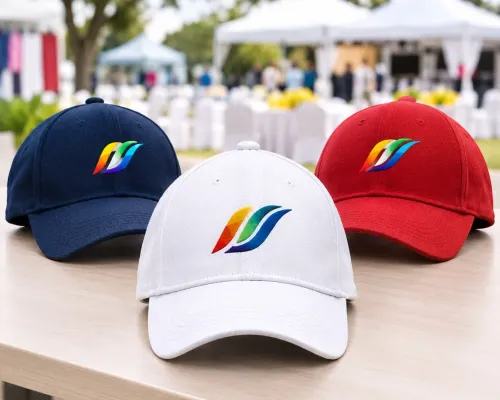
A bulk cap order succeeds only when the campaign goal, cap specification, decoration method and inspection standard are decided before production begins. Use the planning steps below to turn a logo and distribution plan into merchandise that fits the audience, survives use and arrives in the right quantity.
Key takeaways
- Set one campaign objective before choosing cap quantity or design.
- Match fabric, closure and fit to the audience and wearing conditions.
- Send vector artwork and confirm decoration size, placement and thread colours.
- Approve a sample, inspect the batch and document delivery requirements.
What should the caps achieve, and how many do you need?
Set one campaign objective before choosing a cap: lead generation, event visibility, employee identification, retail resale, customer loyalty or social-media amplification. Decide what a successful recipient does—scan a QR code, visit a stand, wear the cap on shift or post a photo—because a vague “giveaway” produces the wrong quantity and design.
- Estimate usable recipients, not total footfall. For an event, multiply expected attendees by the share likely to accept a cap; for staff, count assigned employees and planned replacements; for several distribution points, calculate each location separately.
- Add a controlled reserve: 5–10% for staff changes, damaged pieces and late arrivals. Increase it only when replacement access is slow or the campaign runs across multiple dates.
- Check the supplier’s minimum order quantity before rounding the total. Ask for a written breakdown showing whether the minimum applies separately to cap style, colour, size or decoration, plus setup and sample charges, allowable size or colour splits, and overrun or underrun treatment.
- Order the lower quantity when demand is uncertain, then schedule a repeat run if the supplier can preserve the approved sample, colours and artwork. Excess stock ties up cash and leaves you with caps sized, dated or branded for a finished campaign.
For children’s promotions, classify the audience before ordering: products for children 12 or under can trigger U.S. tracking, testing and certification duties.
Which cap construction will suit the audience and use case?
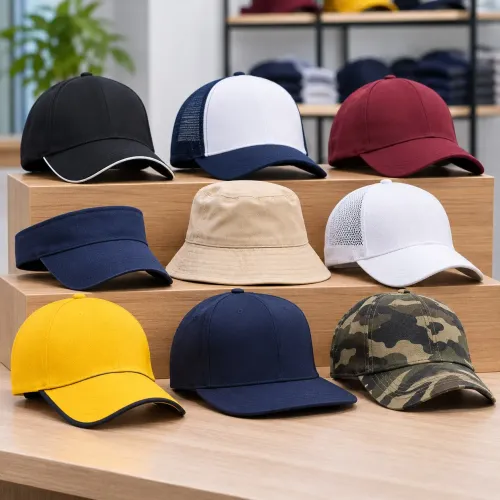
Choose the construction around the wearer’s activity, climate and expected appearance. A six-panel cap gives a symmetrical front for a centred logo, while a five-panel cap offers a broad, uninterrupted front panel but can fit differently across the forehead.
| Option | Appearance and fit | Best use |
|---|---|---|
| Six-panel cap | Balanced shape; familiar, dependable fit | Staff uniforms, schools and general campaigns |
| Five-panel cap | Clean, uninterrupted front; stronger streetwear look | Outdoor events and bold front graphics |
| Structured crown | Firm profile; holds its shape | Formal identification and retail presentation |
| Unstructured crown | Softer, lower profile; packs easily | Casual giveaways and relaxed audiences |
| Curved brim | Reduces glare and looks conventional | Daily outdoor wear |
| Flat brim | More angular, fashion-led appearance | Youth, music and streetwear campaigns |
Choose cotton for a soft, breathable feel; choose polyester for quicker drying and better colour retention during active use. Use mesh rear panels for airflow, but avoid them when the audience needs a uniform, formal appearance.
Approve the closure on the finished sample. Hook-and-loop provides wide adjustment but can catch hair; a plastic snapback gives discrete size positions; a metal-slide or fabric strap looks more refined but demands closer adjustment.
Do not rely on “one size fits most.” Specify the intended head-size range, crown depth and finished circumference, then measure samples with the sweatband and closure fitted. A curved logo area also needs a physical decorated sample because artwork can distort across the crown.
How do you prepare artwork and choose the decoration method?
A logo is production-ready when supplied as vector artwork, such as an outlined AI, EPS or SVG file, with text converted to paths and no missing fonts. Add finished artwork dimensions, decoration position, thread or ink references, and a version showing minimum lettering size and clear space.
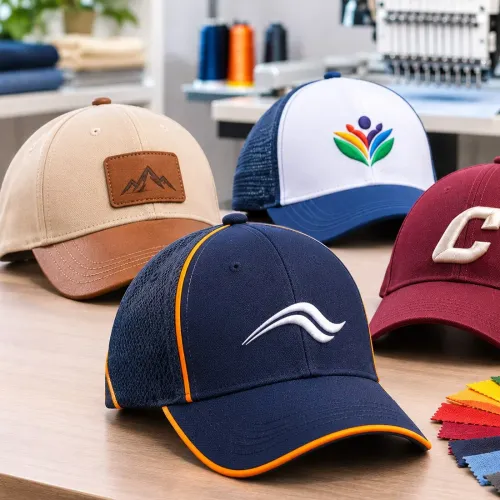
Flat digital proofs hide curvature. Request an embroidery sew-out or decorated sample, because narrow outlines, tiny counters and small negative spaces can close on a curved front panel. Limit 3D puff embroidery to bold, separated lettering or simple marks.
| Decoration | Detail and appearance | Durability, cost and lead time |
|---|---|---|
| Embroidery | Strong texture; fine detail is limited, especially in puff | Highly durable; moderate setup and production time |
| Screen printing | Sharp flat colour and good large-area detail | Durable on suitable fabric; economical for larger runs, with screen setup time |
| Heat transfer | Handles fine detail, gradients and small runs | Good with the correct film; fast setup, but dark polyester requires dye-migration testing |
| Woven or printed patch | Preserves small lettering and gives a distinct badge-like finish | Durable when stitched; higher handling and lead time than direct print |
| Metal or PVC badge | Strong visual impact and raised or rigid detail | Durable but heavier; highest unit and setup cost in many orders |
Do not treat a Pantone code as a complete colour approval. Record the colour, cap material and decoration process, then retain a signed physical standard or approved production sample. For a dark polyester cap using heat transfer, require a compatible system plus wash and heat testing before bulk production.
What should you demand from a promotional cap manufacturer before approving production?
Approve production only after the supplier passes a physical sample, a written specification and a defined remedy for defects. A digital mock-up cannot show how fine lettering or narrow outlines behave on a curved crown.
1. Demand a pre-production proof with the exact cap, fabric, closure, decoration method and artwork. Inspect a physical sew-out or decorated sample for alignment, thread density, edge quality, distortion, loose threads and fit. Record measurements such as crown height, brim length and adjustable range, with permitted tolerances.
2. Specify each Pantone colour alongside its material and process: woven fabric, embroidery thread, transfer film or packaging print. Pantone approval alone does not ensure a match. Sign and retain one physical colour standard or approved production sample for final comparison.
3. Require a quality plan that separates critical, major and minor defects, states the inspection sample size and defines pass or fail limits. ISO 2859-1 can provide the sampling framework, but it does not set your acceptable defect rate.
4. Get the minimum order quantity in writing for each style, colour, size and decoration method. Confirm setup and sample charges, permitted colour or size splits, and how overrun or underrun affects invoicing.
5. Put replacement protection in the purchase order: notification deadline, evidence required, replacement or credit terms, and responsibility for freight. Use this same acceptance sheet with Promotional Cap Manufacturer so quality claims are tested against agreed evidence, not promises.
What is the safest ordering, inspection and delivery sequence?
The safest sequence is a signed brief, approved production sample, controlled manufacture, documented quality-control inspection, and delivery acceptance against agreed records. Put the production timeline, quantities, specifications, packaging, inspection method and remedy for shortages or defects in the purchase order before paying a deposit.
1. Confirm the brief and compliance duties. For U.S. sales, specify fiber content, country of origin and the responsible company under the FTC Textile Labeling Rule. Support any UPF claim with textile testing such as AATCC TM183; do not infer protection from colour or fabric weight.
2. Approve a physical sample, not only a Pantone reference. Record the fabric, thread, transfer or print process, closure, measurements and signed colour standard. State any origin claim precisely; “designed in the USA” does not mean “Made in USA.”
3. Freeze the production timeline with artwork approval, material booking, decoration, inspection, packing and dispatch dates. Add buffer for approval changes and require written notice when a milestone slips.
4. Define the quality-control inspection before production. Use ISO 2859-1 for the sample plan, then specify your own critical, major and minor defects and acceptance numbers. A loose thread is not equivalent to a broken closure or unreadable logo.
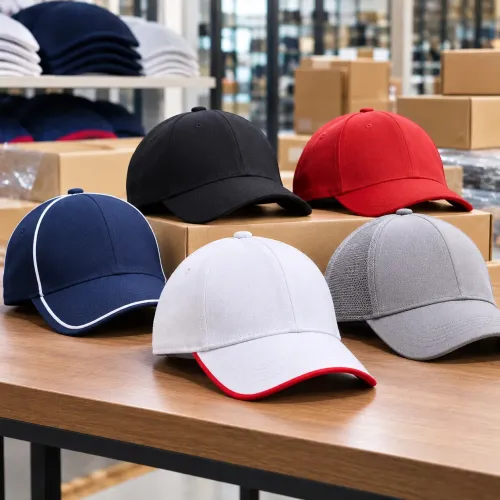
5. Approve packaging details: cap count per inner carton, carton quantities, size or colour labels, moisture protection, shipping marks and packing list. Ask for inspection photographs and carton dimensions before dispatch.
6. At delivery, count cartons and units, inspect visible damage, compare colours and sizes with the signed standard, and record shortages or defects on the carrier receipt. Retain samples, photographs and the inspection report before releasing final payment.
Frequently asked questions
How many promotional caps should a campaign order?
Start with the campaign objective, recipient action and distribution plan. Count confirmed recipients, event staff, replacement units and a controlled reserve instead of treating every cap as an unplanned giveaway.
Which cap construction suits different audiences and uses?
Choose construction based on wear, climate, fit and brand position. Compare cotton, polyester and blended fabrics; structured and unstructured crowns; curved and flat brims; adjustable and fitted closures; and mesh panels for ventilation.
How should artwork be prepared for cap decoration?
Provide clean vector artwork in formats such as AI, EPS or PDF, specify Pantone colours, confirm embroidery or print dimensions, and request a digital proof showing placement on the selected cap.
What should you ask a promotional cap manufacturer before production?
Request material and construction details, decoration samples, size and colour information, production lead time, packaging specifications, quality checks, replacement terms and a written quotation with every cost listed.
What is the safest process for ordering and receiving promotional caps?
Approve the specification and physical or digital sample, place a documented purchase order, confirm a production milestone, inspect random cartons and finished caps, then record shortages or defects before final acceptance.