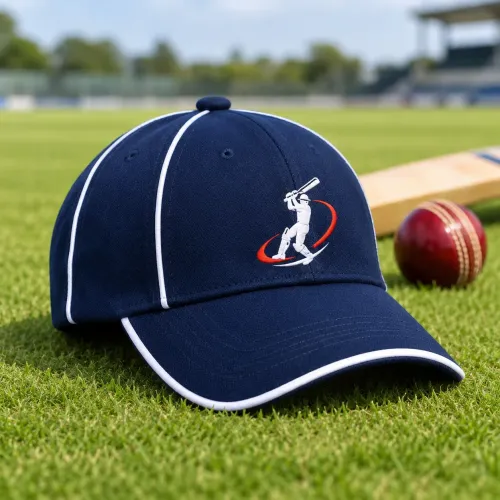
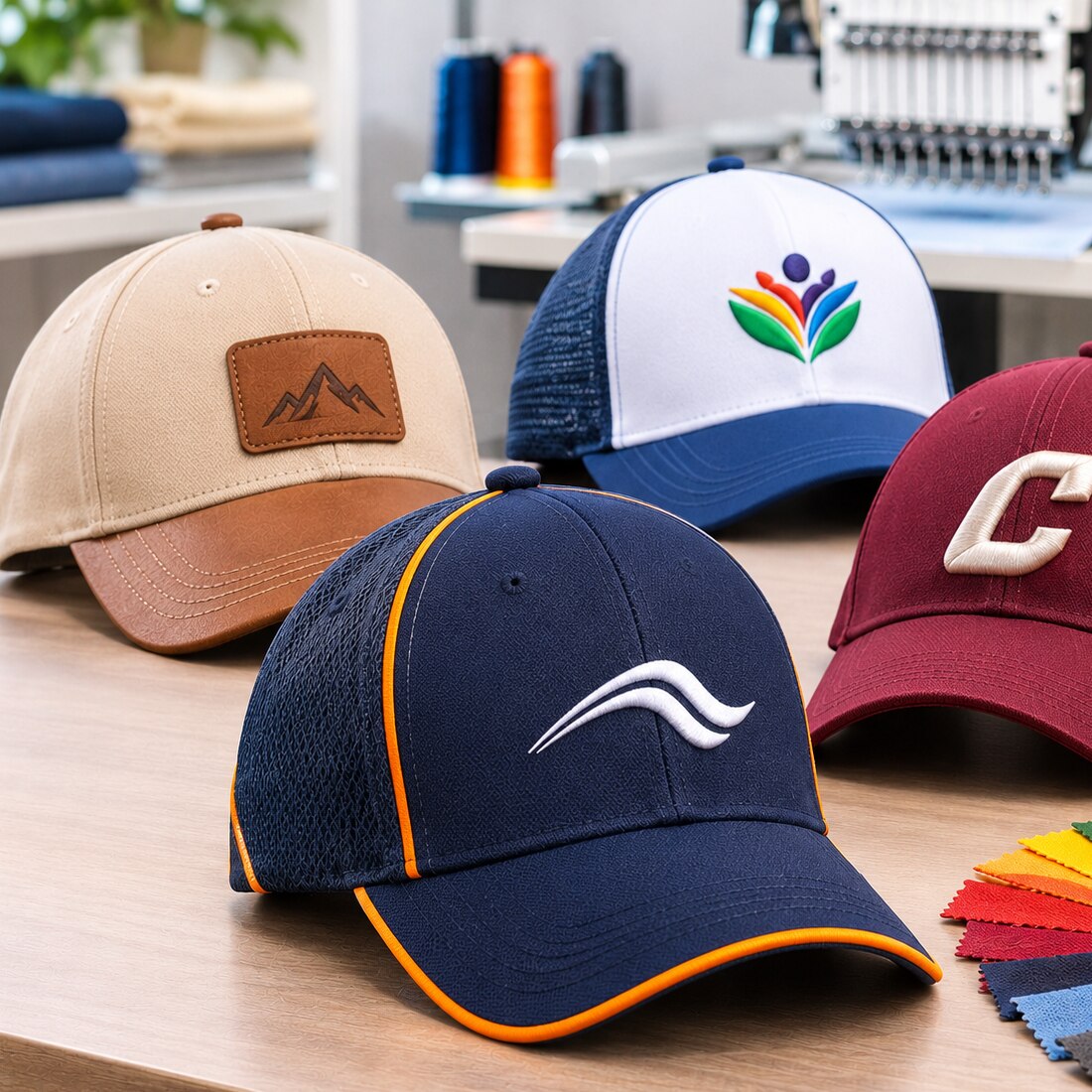
A bulk cap order succeeds when the style, fabric, fit, decoration method and approval controls are chosen as one system rather than as separate catalogue options. By the end, you will be able to brief a manufacturer, compare construction and material trade-offs, approve artwork and samples, and reduce the production failures that become expensive at scale.
Key takeaways
- Match cap construction to fit, activity and intended wear.
- Choose fabric by comfort, colourfastness, durability and care needs.
- Match embroidery, printing or patches to artwork size and detail.
- Approve a physical sample, specifications and production controls before bulk delivery.
What a custom cap manufacturer handles from brief to bulk delivery
A custom cap manufacturer turns your concept into specifications, samples, production controls and a delivery plan. That includes checking whether the artwork, construction, materials and target quantity can be produced consistently before a bulk cap order is accepted.
- Brief and feasibility review: confirm the cap style, size range, intended use, decoration method, quantity, delivery address and budget.
- Cap tech pack: record measurements, panel construction, artwork scale, placement tolerances, fabric standards, thread references, closure hardware and packaging instructions.
- Sampling: produce a physical prototype, decorated strike-off or sew-out, then revise fit, colour, logo position and construction until you approve a pre-production sample.
- Personalized cap production: source approved materials, cut and join panels, apply decoration at the correct production stage, attach closures and inspect workmanship.
- Bulk control and dispatch: compare output with the signed sample, check shade consistency and hardware, pack by size or variant, and arrange shipment documentation.
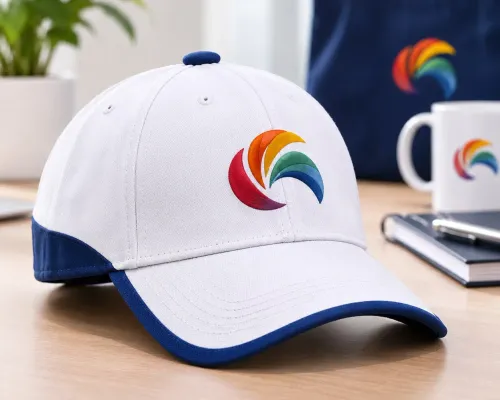
The sample must show the finished curved surface. Applying embroidery before joining panels can distort a logo, while incorrect stitch density, backing or thread tension can cause puckering on lightweight fabric.
Approve crown fabric, thread or print, closure, eyelets and sweatband colours separately; one Pantone match does not guarantee identical visual results across materials. Validate washing instructions on the decorated cap, because heat transfers and patches can lift and embroidery can abrade thin fabric.
For children’s caps, request destination-market checks for lead and other restricted substances. Keep fibre-content labelling separate from country-of-origin claims before the shipment leaves the factory.
How to choose the right cap style, fit and construction
The right cap construction balances appearance, comfort, adjustability and the demands of the wearer’s activity.
| Style | Appearance and performance | Best fit and limitation |
|---|---|---|
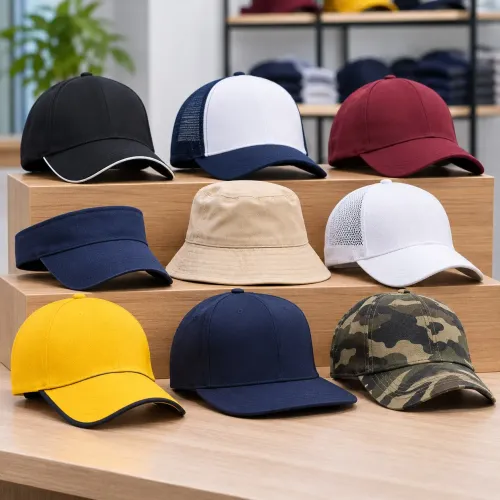
| Five-panel caps | Clean front panel, low seam interruption and a modern profile; good for bold prints and lighter wear. | Streetwear, events and lifestyle branding; the broad front can distort around dense embroidery. |
| Six-panel caps | Traditional curved crown with a stable, familiar shape; structured versions provide a predictable embroidery surface. | Uniforms, sports and everyday use; more seams can create pressure points if the crown block is wrong. |
| Trucker caps | Foam or fabric front with a mesh rear for airflow and a taller visual profile. | Outdoor promotions and warm conditions; mesh improves ventilation but offers less protection from sun. |
| Snapback caps | Flat or adjustable brim with a plastic snap closure and strong casual styling. | Groups needing broad size coverage; the closure can feel bulky against the head. |
| Fitted caps | Smooth, uninterrupted rear and a tailored appearance without an adjuster. | Teamwear and premium uniforms; you must order accurate size ranges because fit cannot be corrected later. |
| Visors | Open crown keeps the top of the head cool while the bill shades the eyes. | Running, golf and outdoor staff; it provides little warmth or protection from rain. |
Define the head-circumference range, crown height, bill length and curve, sweatband thickness, and closure adjustment range. Measure around the head above the eyebrows and record the method; two “one size” caps can fit differently because panel curvature and closure placement change the internal volume.
- Choose a structured crown for crisp logos and a uniform silhouette.
- Choose an unstructured or washed crown for a softer, head-conforming fit.
- Request a physical sample with the intended decoration before approving bulk production.
How fabrics change comfort, durability, colour and care
Compare the fabric against the wearer’s climate, workload, artwork and washing routine. A soft hand feel may improve comfort, but a loose weave can snag, fade or distort under daily use.
| Fabric | Comfort and durability | Colour and care |
|---|---|---|
| cotton twill | Breathable, softens with wear and suits everyday uniforms; can crease and shrink without pre-treatment. | Holds printed and embroidered branding well, but can fade with washing and sunlight; use cool washing and low heat. |
| polyester caps | Lightweight, abrasion-resistant and quick-drying; less absorbent than cotton. | Strong colour retention; dye sublimation works best because dye enters the polyester polymer, but approve the exact fabric lot and process. |
| mesh caps | Open structure improves ventilation in heat; edges and holes can snag. | Usually polyester, so colours remain stable; wash gently and avoid high heat that can deform the mesh. |
| canvas caps | Dense, rugged and protective; feels stiffer and warmer. | Supports heavy embroidery and patches; washing can create creases and fading. |
| denim | Durable with a familiar, structured feel; heavier and warmer than twill. | Expect gradual fading and colour transfer; wash separately at first. |
| recycled polyester | Performs like comparable polyester when the yarn and construction match. | For a recognized recycled claim, request Global Recycled Standard chain-of-custody and transaction or scope documents. |
| blended fabrics | Balance softness, strength, stretch and drying speed according to the fibre mix. | Check the actual percentage and test the finished cap for colourfastness, perspiration and crocking. |
Validate washing instructions on the decorated cap, not the blank fabric. Adhesive patches and heat transfers can lift, while embroidery can distort lightweight cloth.
Which branding method and placement suit your artwork
Fine lettering needs a method that preserves edges at the artwork’s actual size; gradients need ink or colour blending rather than thread changes. Choose the decoration after checking the logo at final scale, not from a large flat proof.
| Method | Fine lettering | Gradients and multiple colours | Reflective details |
|---|---|---|---|
| cap embroidery | Strong for bold lettering, but dense stitches can close tiny gaps and distort lightweight or unstructured crowns | Handles solid colours well; gradients require many thread changes and rarely look smooth | Use reflective thread only when its appearance and visibility meet your brief |
| direct printing | Reproduces small lines and detailed artwork cleanly on a suitable flat panel | Best for photographic detail, gradients and numerous colours | Reflective ink requires a specific printed finish and physical approval |
| heat transfer | Preserves small text and sharp edges without piercing the fabric | Handles complex, full-colour artwork effectively | A practical choice for reflective film; edges can lift under repeated washing or high heat |
| woven patch | Produces crisp small lettering with a defined border | Supports several solid colours, but gradients become stepped or woven-looking | Add reflective yarn or a reflective layer only if specified |
| appliqué | Suits large, simple letters and shapes rather than fine type | Layered fabrics create bold colour blocks, not smooth gradients | Add reflective fabric for a clear, high-contrast effect |
Place the mark on the assembled cap and approve a physical decorated sample. Front panels curve, side panels offer less area, and back or closure branding needs a smaller scale. Test washing on the finished cap; the blank fabric’s care specification does not prove that embroidery, a patch or a transfer will stay attached.
How to approve a bulk cap order and control production risk
Do not release a bulk purchase until a signed tech pack, physical sample and inspection plan agree. A digital logo proof cannot reveal puckering, shade variation, misplaced artwork or closure hardware that differs from the approved sample.
1. Send production artwork in vector format with Pantone references, finished logo dimensions, placement from the centre seam, seam allowances, orientation and tolerance. Specify thread brand and colour, stitch density, underlay, backing and needle requirements for embroidery. For a PVC patch or appliqué branding, define thickness, edge finish, attachment method and approved artwork scale.
2. Require a pre-production sample made with the intended fabric, closure, eyelets, sweatband, thread, print ink and branding process. Approve a physical sew-out for embroidery and inspect the logo on the assembled curved crown, not only on a flat panel.
Ask Promotional Cap Manufacturer to record the sample’s measurements and hardware details in the signed tech pack.
3. Approve colour by component: crown fabric, thread, printed artwork, closure, eyelets and sweatband. Sign a physical strike-off or pre-production sample; one Pantone code does not guarantee identical appearance in dyed fabric, thread and transfer ink.
4. Record fibre content and country-of-origin wording separately, then check destination-market rules. For children’s caps, assess accessible metal and plastic parts, prints and paints for lead and other restricted substances.
5. Define incoming, in-line and final inspection checks for measurements, seam position, logo drift, shade lots, stitching, stains, loose threads and hardware. Use AATCC TM61 for comparative laundering screening, then test perspiration and crocking separately when skin or light clothing is involved. Reserve payment for conforming goods.
Frequently asked questions
What does a custom cap manufacturer handle before bulk production?
The manufacturer converts your brief into specifications for style, fit, fabric, artwork, branding method, quantity, quality checks and delivery.
How do you choose the right custom cap style and construction?
Compare closure type, crown shape, panel count, brim, fit range and reinforcement against how and where the caps will be worn.
How do fabrics affect custom cap performance?
Fabric changes comfort, breathability, durability, colour appearance, shrinkage risk and washing requirements, so select it against the wearing conditions.
How do you reduce risk when approving a bulk cap order?
Approve a physical sample and written specifications, then confirm artwork placement, measurements, materials, packaging, inspection points and delivery terms before production.