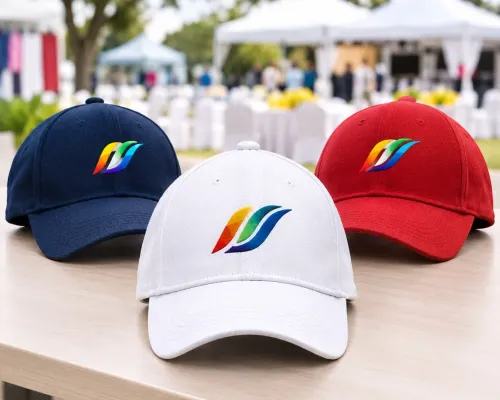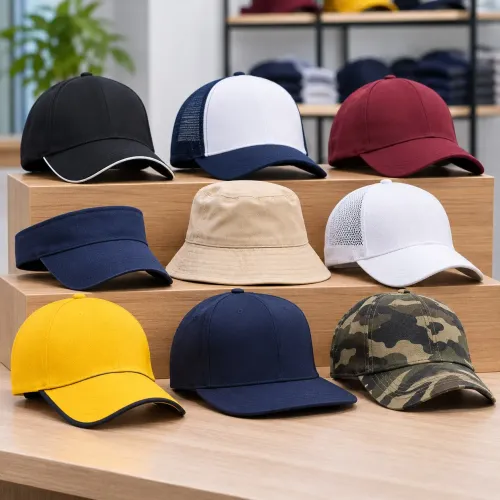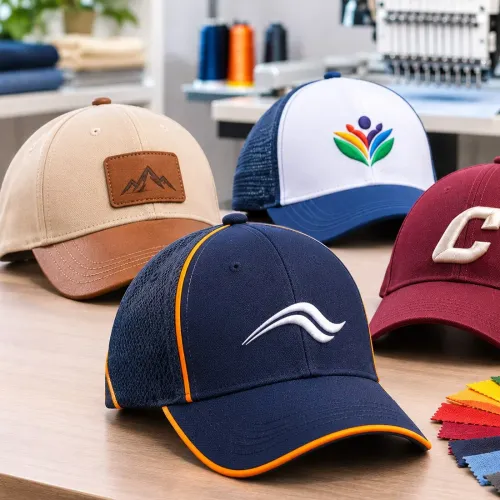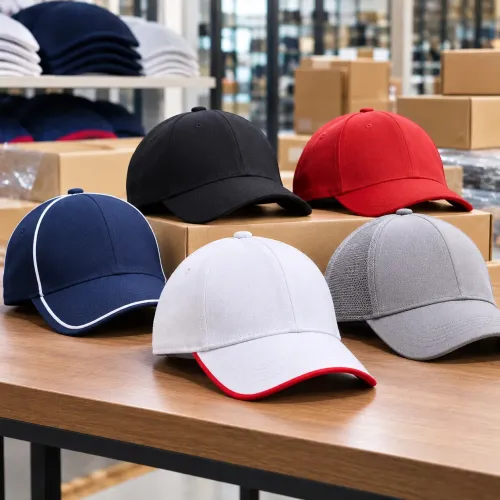
A cotton cap can feel cool and breathable yet still become uncomfortable when its sweatband stays wet, seams rub, or the crown fits too tightly. You will be able to specify the fabric, fit, decoration, testing and inspection terms that separate a comfortable bulk giveaway from a cap recipients discard after one use.
Key takeaways
- Choose 180–220 GSM cotton twill for a lightweight, breathable cap.
- Skip a full inner lining when you need airflow in warm weather.
- Test the fit, decoration and wash performance before approving bulk production.
- Put fabric, sizing, artwork and quality checks in the bulk-order checklist.
Specify Cotton Weight, Weave and Lining for the Weather
Choose a lightweight, unstructured cap made from 180–220 cotton cap GSM fabric, with a cotton twill weave, ventilation eyelets and no full inner lining. This construction allows air movement and conforms to the head instead of trapping extra heat beneath a stiff crown.
| Construction choice | Comfort effect in hot, humid weather | What to specify |
|---|---|---|
| 180–220 GSM cotton twill | Light enough for outdoor wear without feeling flimsy | State GSM tolerance and whether the figure is before or after finishing |
| 230–280 GSM cotton twill | More durable, but warmer and slower to dry | Use for shorter events or rougher handling |
| Full cotton lining | Absorbs sweat but retains moisture against the head | Avoid unless it is thin, smooth and tested after washing |
| Unlined crown with a soft sweatband | Reduces heat and seam bulk | Request smooth internal seams and a low-bulk sweatband |
| Structured crown with buckram | Holds embroidery sharply but adds stiffness and heat | Choose only when logo stability matters more than maximum airflow |
A breathable cap fabric still fails if the sweatband scratches, the seams rub, or the crown sits too deeply. Ask for four to six stitched eyelets and inspect the inside of the sample, not only the exterior.
If you require cotton lining, use a lightweight partial lining rather than a full crown layer. Wash-test the finished cap using your intended cycle; cotton can shrink, and ISO 6330 provides standard washing and drying procedures for dimensional-change testing.
Match the Fabric to Washing, Worksites and Event Duration
Choose cotton for a one-day giveaway or a warm event where soft hand-feel and sweat absorption matter more than rapid drying. Compare cotton versus polyester caps against the actual washing schedule and worksite before choosing by touch alone.
| Option | Strength | Limitation | Best use |
|---|---|---|---|
| 100% cotton | Absorbs sweat and feels soft against skin | Holds moisture, can shrink and crease after washing | Short events, casual uniforms and giveaways |
| Polyester | Dries quickly, resists shrinking and retains shape | Feels warmer or less absorbent to some wearers | Sports, humid conditions and frequent washing |
| Canvas cap | Dense, abrasion-resistant and protective | Heavier and less breathable | Dusty worksites and rugged outdoor use |
| Drill fabric cap | Tightly woven, durable and more structured | Stiffer than ordinary cotton twill | Work uniforms requiring repeated wear |
| Cotton polyester blend cap | Balances cotton comfort with faster drying and better dimensional stability | Does not provide the full feel of either fibre | Institutional use and mixed indoor-outdoor duties |
A cotton cap is the wrong choice for repeated hot washes unless you test shrinkage and colour change first. Run the proposed fabric through the buyer’s defined cycle, using ISO 6330 procedures as the testing reference, then measure crown depth, sweatband fit and brim alignment.
Specify the fibre percentages and panel construction on the order: “100% cotton,” “65/35 cotton-polyester,” or “cotton front panels with polyester mesh.” Check AATCC TM61 for laundering colourfastness and AATCC TM15 for perspiration when fading or dye transfer would damage the uniform.
Set the Fit Before You Approve the Blank Cap
Measure the wearer’s head circumference in centimetres, above the ears and across the forehead, then state the cap head-size range on the specification. A cap that only says “one size” can still pinch larger heads or slide over smaller ones.
1. Set the crown depth against the wearer’s head, not just the circumference. A shallow crown presses on the temples; an overly deep crown collapses, traps heat and leaves the cap looking oversized. Compare the front, side and back profile on a real wearer.
2. Choose an adjustable cap closure that matches the use. Hook-and-loop allows fast adjustment but can catch hair and expose a rough hook edge. A metal-slide buckle looks cleaner but leaves a tail to manage; plastic snaps provide repeatable sizing with a lower-profile finish.
3. Specify the brim length and curve. A short brim gives a lighter, less obstructive feel, while a longer brim provides more sun coverage but can touch glasses or obstruct upward sightlines. Confirm that the visor does not pull the crown forward.
4. Decide between unstructured and structured construction. An unstructured cotton cap follows the head more softly; fused buckram creates a stable front but adds firmness and heat. Check the inner seam finish, sweatband softness, crown ventilation and closure edges, because rough contact points can ruin comfort even when the outer fabric feels soft.
Approve the blank on several head sizes before decoration. Test it for pressure, crown collapse, brim position and ventilation after ten minutes of wear.
Choose Decoration That Survives the Wearer’s Use
Cap embroidery gives the best overall balance for durable branded giveaways, provided the logo is digitized for the cap’s curve and kept out of the seam. It looks established, survives repeated washing, and resists peeling, but dense stitching can add weight, stiffness and heat against the forehead.
| Method | Legibility and appearance | Comfort and wash performance | Production effort |
|---|---|---|---|
| Cap embroidery | Premium, dimensional finish; small text can lose clarity | Highly durable; dense fills can feel stiff or pucker | Requires digitization, backing and sample approval |
| Screen printing on cotton | Sharp, flat colour for large artwork | Soft and breathable; ink can fade or crack after repeated washing | Efficient for simple designs and larger runs |
| Heat transfer cap logo | Handles fine detail, gradients and small lettering | Smooth and light; poor application can lift or crack | Fast setup, but pressing curved crowns needs control |
| Woven patch cap | Crisp text and borders with a distinctive badge appearance | Durable; patch edges and backing add bulk | Requires patch manufacture and sewing or heat application |
Use screen printing on cotton for a one-day event or a large, simple logo where low production effort matters. Choose a heat transfer cap logo for detailed artwork that embroidery cannot reproduce comfortably. A woven patch cap suits outdoor, club and workwear styling, but check its edge against the wearer’s forehead.
Approve the decoration on the final five- or six-panel cap, not a flat fabric swatch. Request the production size, thread or ink colours, backing and wash result after your defined cycle; ISO 6330 provides standard domestic wash and drying procedures. On unstructured cotton, reduce stitch density because the front panel distorts more easily.
Use a Production Sample and a Written Bulk-Order Checklist
Approve one pre-production cap sample before authorising any bulk cutting or embroidery. A digital proof cannot reveal puckering, seam interference, visor shape, crown collapse, backing visibility or thread sheen on a curved cap. The sample must use the production-equivalent cotton, panel construction, closure, backing, decoration method and packaging.
Record the approval in a cap artwork checklist, then attach the approved sample or clear photographs to the purchase order. Give the Promotional Cap Manufacturer a signed reference that removes interpretation from the bulk run.
1. Record the cap style, panel count, fabric composition, fabric colour, crown construction, closure, visor dimensions and size range.
2. Approve the final artwork at its actual placement and size. Record logo dimensions and thread colours using thread references, plus stitch type, backing, clear space and any small lettering that must be enlarged for legibility.
3. Define the wash test for repeated-use caps. Cotton can shrink after laundering, so inspect a sample after the buyer’s specified cycle; ISO 6330 provides standard domestic washing and drying procedures for dimensional-change testing.
4. State packaging, folding, labelling and carton quantities. These details prevent acceptable samples from becoming damaged or missorted shipments.
5. Specify the AQL cap inspection in the purchase order: inspection level, lot size, sample size, critical, major and minor defect definitions, and acceptance numbers under ISO 2859-1. “Inspect every cap” is not a measurable acceptance plan.
Do not approve substitutions without written permission. A different fabric, backing or thread can change fit, colour, comfort and embroidery quality even when the artwork remains identical.
Frequently asked questions
What cotton weight is suitable for a comfortable branded giveaway cap?
Choose 180–220 GSM cotton cap fabric for a lightweight cap, then match the construction to the weather and intended wear.
Should a cotton cap have a full inner lining?
A full inner lining can trap extra heat. For warm conditions, choose an unstructured cap with ventilation eyelets and no full inner lining.
How do you choose a cap fit before placing a bulk order?
Approve the blank cap only after checking its crown shape, adjustability, head coverage and comfort on the intended wearers.
How can you make branded cap decoration last?
Match the decoration method to the wearer’s washing, worksite and event duration, then inspect a production sample before bulk approval.