A bulk cap order fails when the style, fit, decoration, colour or delivery promise changes between the sample and the shipment. You will be able to compare cap constructions, define a measurable order specification and test a distributor’s ability to supply consistent stock across repeat purchases.
Key takeaways
- Request a written specification covering fabric, closure, panels, visor and measurements.
- Match cap construction to the wearer’s job, climate and required durability.
- Confirm size ranges, samples, minimum order quantities and repeat-order terms.
- Approve decoration samples and inspect colour, stitching, placement and packaging before dispatch.
What Makes a Bulk Cap Distributor Reliable?
A dependable bulk cap distributor passes five checks before you place a large order: consistent specifications, confirmed stock, repeat-order capability, documented inspections and dependable dispatch.
1. Ask for a physical sample, not photograph approval. Record fabric composition, fabric mass, crown height, bill length and curvature, closure position, seam construction, sweatband material and decoration location.
2. Seal the approved reference sample and attach written tolerances for dimensions, colour, logo placement and component changes. This prevents individually plausible caps from drifting across cartons or repeat orders.
3. Ask what is stocked and what is made to order. Request confirmation of available quantities, the batch or production identification, carton count, packing format and a written delivery schedule.
4. For larger lots, define quality inspection sampling ISO 2859-1 AQL before production, including lot size, inspection level and acceptance numbers. Separately classify critical, major and minor defects in your purchase terms; AQL does not guarantee a defect-free percentage.
5. Confirm how repeat orders will be matched to the approved sample and what happens if inspection or dispatch milestones are missed. Require written notice, replacement terms and a revised schedule rather than relying on verbal assurances.
A reliable supplier answers these questions with records, not general promises. That evidence is the foundation of predictable bulk cap supply.
Match the Cap Construction to the Job
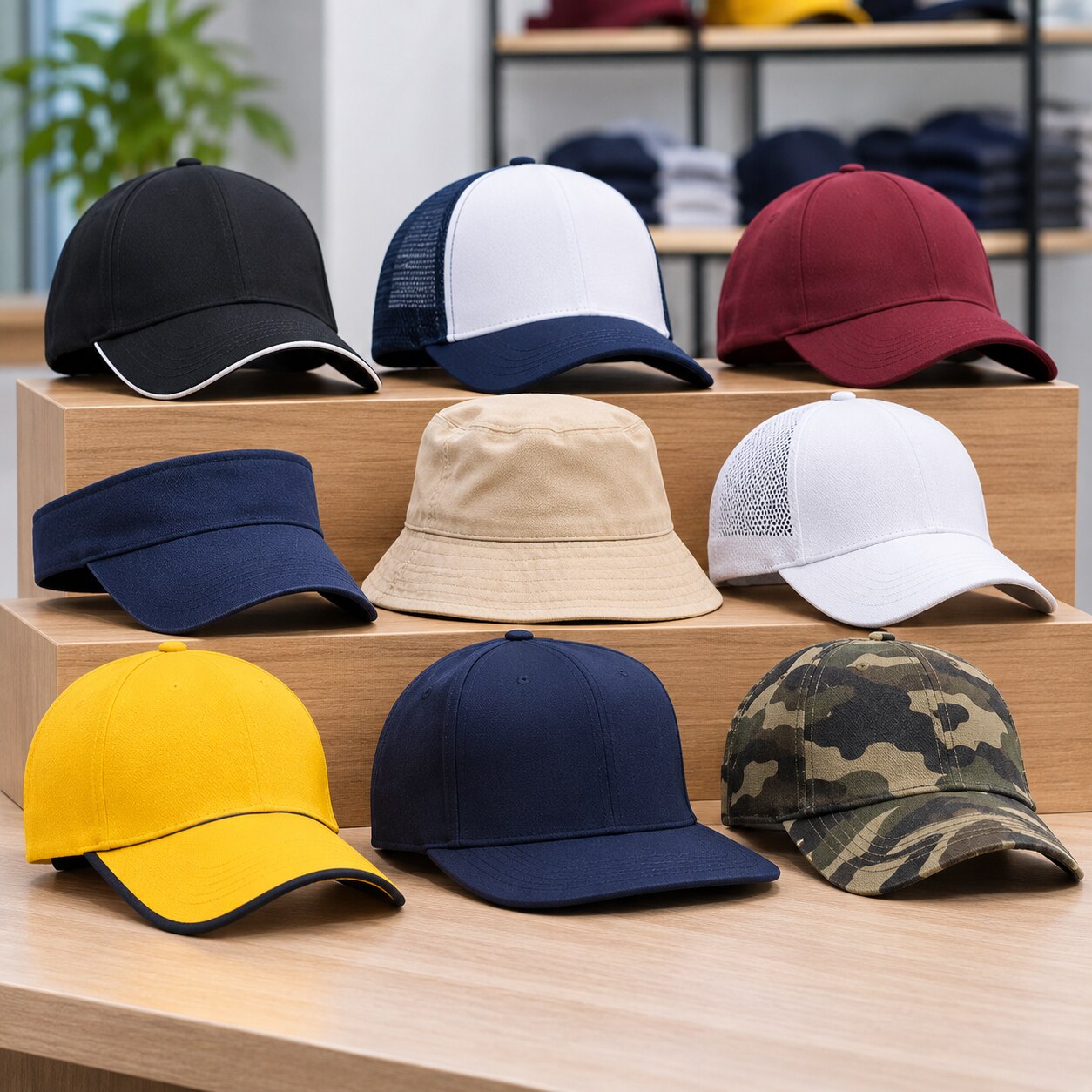
Choose the construction by the wearer’s conditions, decoration method and required appearance—not by the cap’s label alone. Cotton versus synthetic caps involves a direct trade-off between natural hand feel and performance features such as drying speed and colour retention.
| Feature | Best choice | Check before ordering |
|---|---|---|
| Fabric | Cotton-rich for breathable, casual wear; polyester or other synthetic fabric for quick drying, colour retention or sublimation | Confirm composition and test the decorated cap |
| Crown | Structured for a uniform silhouette and stable decoration field; unstructured for softness and packability | Check crown height, front-panel support and comfort |
| Panels | Five-panel cap construction for a broad uninterrupted front | Ensure seam placement and panel height suit the artwork |
| Brim | Pre-curved versus flat brim depends on use: pre-curved suits everyday wear; flat supports streetwear or team styling | Control the flat bill’s final shape |
| Closure | Hook-and-loop for broad adjustment; plastic snaps for quick sizing; metal buckles or sliders for a more premium appearance | Check snagging, cracking, corrosion and engagement |
Structured and unstructured crowns also change how embroidery sits. Dense decoration can stiffen an unstructured crown, while a logo that fits a flat swatch may collide with seams or the bill on the finished cap.
Test every closure through repeated opening, closing and pull cycles. For corporate teams, schools and uniforms, prioritise consistent appearance and easy sizing; for cricket teams, outdoor staff and promotional campaigns, compare ventilation, moisture handling, sun coverage and decoration durability on the finished cap.
Confirm Fit, Sizes and Order Flexibility Before Production
Measure head circumference with a flexible tape above the eyebrows and around the fullest part of the head.
Compare that head circumference measurement with the supplier’s actual adjustment range, not labels such as “adult” or “standard.” Use the cap size chart as a reference, then record crown depth, front-panel height, bill width, bill length, brim dimensions and closure position; two caps with the same nominal size can fit differently.
| Construction | Fit variables to check | Required sample |
|---|---|---|
| Structured six-panel | Higher crown volume, firm front panel and fixed seam placement | Physical fit sample |
| Unstructured cap | Softer crown, reduced structure and different crown depth | Physical fit sample |
| Five-panel cap | Broad front area, different seam position and bill geometry | Physical fit sample |
| Stretch-fit cap | Elastic recovery, closed sizing and pressure around the crown | Physical fit sample |
Before production, request the minimum order quantity, units per carton, available colours, size breakdown and rules for combining mixed styles or colours. Confirm whether one carton can contain assorted sizes and whether colour minimums apply separately to decorated and undecorated caps.
Order samples with the planned decoration and intended use, not blank caps alone. Have representatives of the wearer group test crown pressure, brim visibility, closure slippage and comfort during movement before approving the size matrix. A logo, embroidery backing or transfer can change the cap’s stiffness and fit.
Control Decoration, Colour and Finished-Cap Quality
A decorated cap survives repeat production when its construction, decoration and colour performance are checked on the finished cap rather than judged from photographs or flat fabric swatches.
- Inspect stitch density, seam alignment, sweatband attachment, eyelet finishing, closure strength, brim shape and fabric weight.
- Treat GSM as fabric mass, not a durability score: ASTM D3776 measures mass per unit area, not seam strength, ventilation or comfort.
- Match direct embroidery to structured front panels; dense artwork can pucker thin fabric, stiffen a large area and distort the fit. Specify embroidery backing.
- Use screen printing and heat transfer when you need to avoid stitch distortion, then test adhesion and laundering. Heat transfer can crack or lift over seams, textured fabric or water-repellent finishes.
- Specify sublimation on polyester caps with a polyester-rich, light-coloured substrate. It is unsuitable for cotton-rich or dark grounds.
- Approve the final artwork on the actual cap, including size, thread or ink colours, backing and position. Check that the bill and seams do not obstruct the decoration field.
- Seal separate colour references for the shell, thread, closure, sweatband and decoration.
- Test dense logos for blocked ventilation and changed moisture handling, especially on sports or uniform caps.
For colour claims, name the exposure and test basis: AATCC TM16.3 addresses lightfastness, while AATCC TM61 addresses accelerated laundering. Passing one does not prove resistance to the other. Record tolerances and compare every repeat lot with the approved decorated sample.
Compare Lead Times, Documentation and Dispatch Controls
A reliable plan separates cap production lead time from decoration time. Stocked caps can dispatch after quantity, colour and inspection are confirmed; made-to-order caps need fabric, cutting and sewing time before embroidery, screen printing, heat transfer, appliqué or other decoration begins.
| Option | What to confirm | Main risk |
|---|---|---|
| Stocked caps | Physical quantity, colour, size mix and reservation date | Stock is allocated elsewhere before payment |
| Made-to-order caps | Material booking, production start, completion date and minimum quantity | Material or sewing delays move the delivery date |
| Decorated caps | Decoration capacity, approval stages, inspection and dispatch date | A blank cap arrives on time but the finished order does not |
Require a written schedule with dates for artwork approval, sample approval, the pre-production sample, production completion, final inspection, packing and dispatch. Promotional Cap Manufacturer can be considered when one source must coordinate style selection, decoration and replenishment, but demand the same evidence from any distributor.
Before production, obtain the approved artwork proof, fabric composition, separate colour references, sealed approval sample, packing details and carton markings. Confirm whether care and country-of-origin labelling belongs on a sewn label, hangtag or package. U.S.
textile programmes generally require fibre content, origin and responsible-business identification; an origin mark is separate from a brand or distributor address.
Check that care instructions suit the finished decoration, closure and backing. For outdoor, sports and uniform orders, request evidence for lightfastness, laundering, moisture-wicking or UV claims on the decorated cap.
Finally, confirm the commercial controls: dispatch documents, carton quantities, replacement terms for rejected pieces and the method for matching future lots to the approved sample.
Frequently asked questions
What makes a bulk cap distributor reliable?
Check specification consistency, confirmed stock, repeat-order capability, documented inspections and dependable dispatch controls before ordering.
How do you match cap construction to the job?
Assess the fabric, panel count, closure, visor, ventilation and durability against the wearer’s work, climate and usage.
What should you confirm about fit, sizes and order flexibility?
Confirm head-size measurements, available size options, sample approval, minimum order quantity and terms for repeat or split orders.
How can you control decoration, colour and finished-cap quality?
Approve a decoration sample, record colour references and inspect logo placement, embroidery, stitching, trims and packaging before production.
Which lead-time and dispatch documents should you request?
Request a production schedule, inspection record, packing list, carton details, delivery documents and a clear dispatch confirmation.