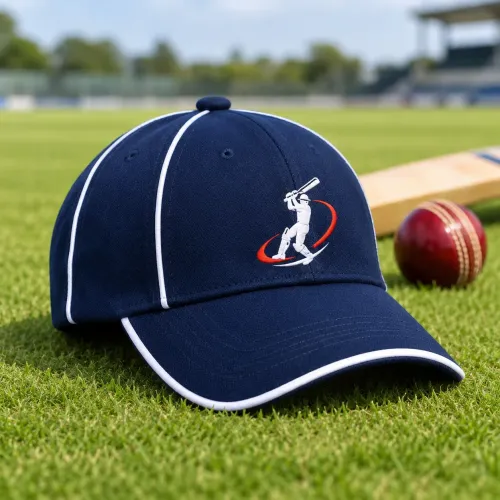
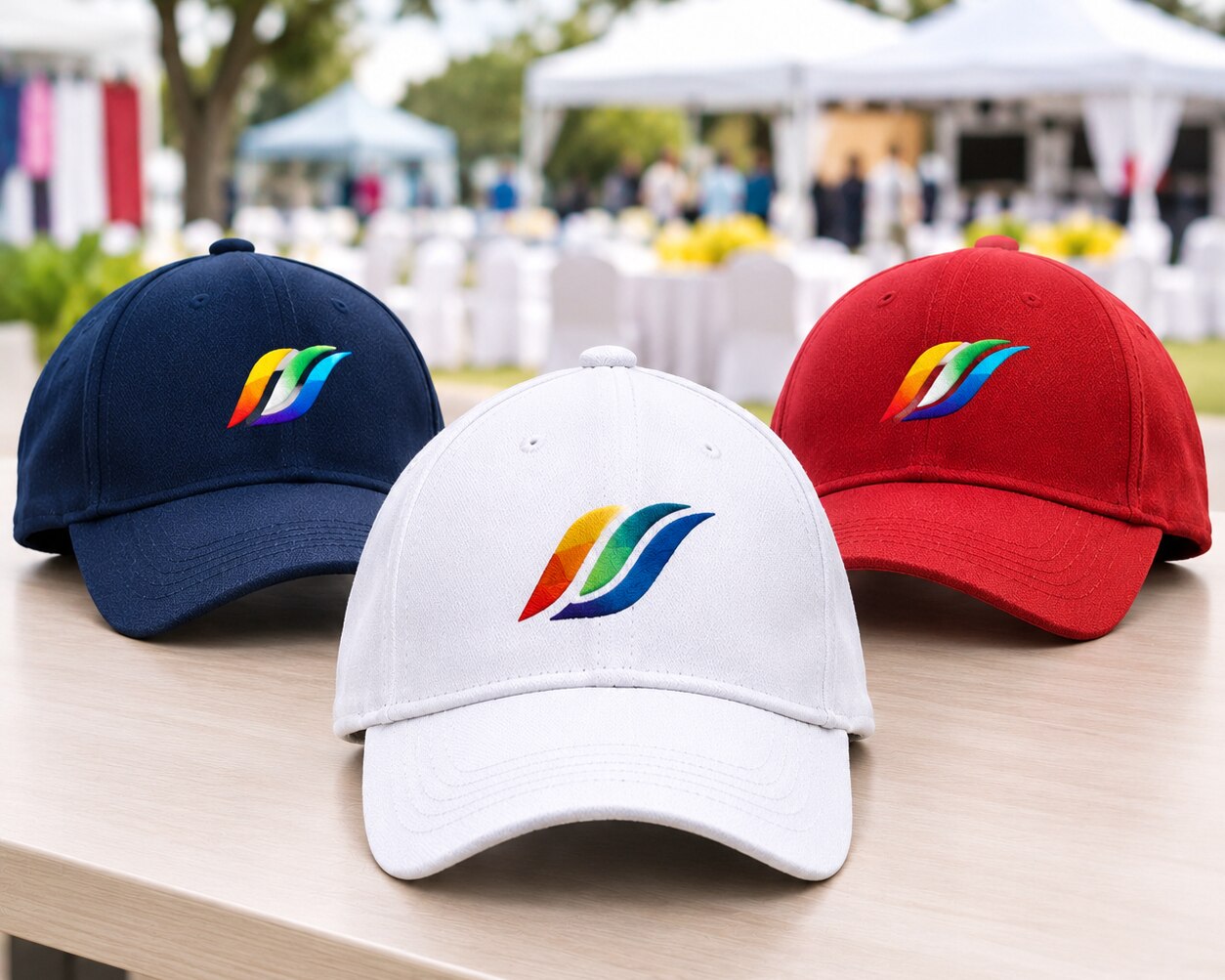
The right printed cap for a one-day event is not automatically the right cap for daily staff wear or a two-week promotion. By separating the use case, construction, fabric, fit, quantity and decoration method, you can create a specification that looks consistent, survives its intended use and avoids waste.
Key takeaways
- Choose five-panel caps when a logo needs an uninterrupted front.
- Select breathable fabric and an adjustable fit for Pune’s heat and monsoon humidity.
- Add replacements for size changes, damage, loss and late attendee requests.
- Use bold artwork with clear spacing so printing stays readable on curved panels.
Match the cap construction to the job
A five-panel cap with a broad, uninterrupted front is the strongest choice for printed caps at a short campaign or one-day event. A six-panel cap gives a familiar, balanced look, but its centre seam can interrupt a logo or force smaller artwork.
| Construction | Event caps | Staff uniform caps | Promotional campaign caps |
|---|---|---|---|
| Five-panel, unstructured, pre-curved visor | Easy to distribute and comfortable for mixed attendees | Too casual for formal or front-desk roles | Best for short runs, especially with a large front print |
| Six-panel, structured crown, pre-curved visor | Suitable when teams need a consistent appearance | Best for daily wear and a defined uniform silhouette | Suitable when the campaign continues across several dates |
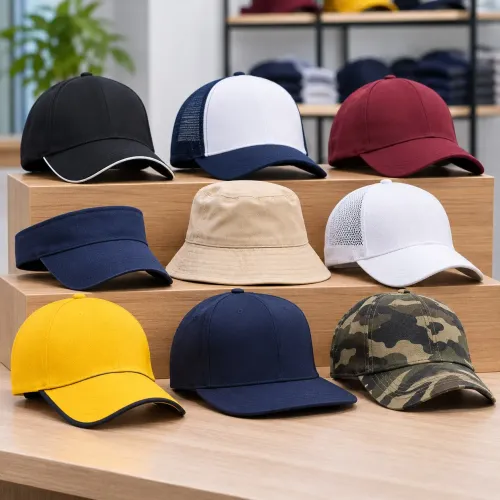
| Six-panel, unstructured crown, flat visor | Works for youth or sports-led events | Packs easily but looks less formal | Useful for a fashion-led campaign with a relaxed identity |
Use a hook-and-loop strap when many people will share one size; choose a metal buckle for a more polished staff uniform. A flat visor allows later shaping but needs more handling before use.
Specify crown profile, panel count, visor shape, closure, decoration size and placement tolerance. “One-size promotional cap” does not reproduce the same fit between factories.
For children aged 12 or younger, confirm whether children’s-product rules apply before distribution. An inexpensive giveaway is not automatically exempt; check testing, tracking information, lead and phthalate limits.
Choose fabric and fit for Pune conditions
Pune heat makes fabric choice a wearability decision. Cotton versus polyester caps involves a clear trade-off: cotton feels soft and absorbs sweat, while polyester dries faster and holds its shape after repeated washing. For breathable caps, look for ventilation eyelets or mesh panels, especially on caps for outdoor events.
| Fabric | Strength | Best fit |
|---|---|---|
| Cotton | Soft, absorbent, less quick-drying | Short events and lower-activity indoor use |
| Polyester | Quick-drying, colourfast, durable | Outdoor activity, sweat and repeated washing |
| Cotton-polyester blend | Balances comfort, drying and durability | Staff uniforms worn all day |
Specify the head circumference range in centimetres, not just “one size.” Adjustable cap sizing through a hook-and-loop strap suits mixed adult groups; a metal buckle gives a cleaner uniform appearance but takes longer to change. Check the smallest and largest settings on a physical sample before approving bulk production.
A shallow crown can press against taller heads, while a deep crown may collapse over smaller ones. Match visor length and curvature to the job: a pre-curved visor gives immediate sun coverage, while a flat visor suits a fashion-led campaign.
For children, order a separate size after measuring the intended age group; adult caps create poor coverage and loose closures. Specify structured or unstructured crown, panel count, closure type, fabric composition and weight in the final brief.
Calculate a quantity that covers real-world losses
Start with confirmed recipients, then add separate allowances for late registrations, staff turnover and damaged or lost caps. This produces a realistic bulk cap quantity instead of a count that fails as soon as the event changes.
1. Count guaranteed recipients. Add registered attendees, presenters, volunteers and current staff who need a cap. Keep event attendees separate from staff uniform inventory so you can replenish uniforms without reducing giveaway stock.
2. Add late-registration capacity. Multiply the attendee count by your expected late-registration rate. For example, 500 confirmed attendees at a 5% allowance require 25 extra caps.
3. Add staff-change capacity. For 35 current staff, a 10% reserve adds four caps after rounding up. Store these with the uniform issue records, not in general event merchandise planning stock.
4. Add replacement stock. Set aside 3% to 5% of the subtotal for wrong sizes, lost caps, decoration damage and unexpected replacements. Choose the higher rate for outdoor events, children’s activities or multi-day use.
5. Round up to complete carton quantities only after calculating every allowance. For example: 500 attendees + 25 late registrations + 35 staff + 4 staff reserves = 564; a 5% replacement stock allowance adds 29, producing a bulk cap quantity of 593. Order the next full carton above that number.
Prepare artwork that remains readable on a curved cap
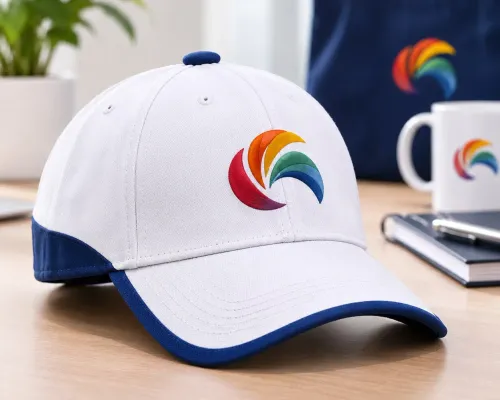
A cap logo artwork must work at its finished size and from 3–5 metres away, not only on a large monitor. Use one dominant mark, remove fine outlines and tiny taglines, and choose high contrast between the decoration and the cap fabric.
1. Size the main logo to the usable front-panel area, leaving clearance from the centre seam, eyelets, visor break and panel edges. Specify the finished width or height in millimetres; “centre the logo” is not a reproducible instruction.
2. Simplify lettering before production. Use bold letterforms, open counters and short words. Tiny text, narrow strokes and close-set details often fill in during embroidery, so request a physical sew-out at the exact logo size instead of approving a digital preview or stitch count alone.
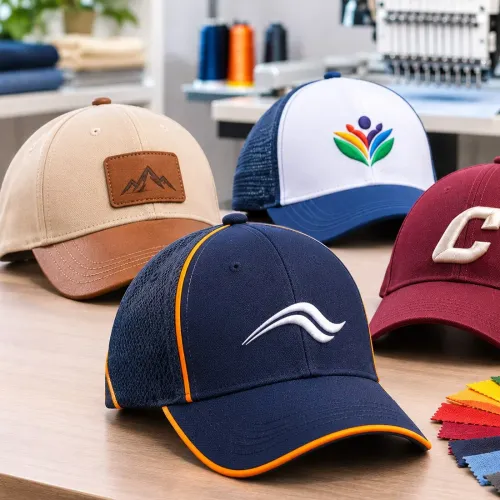
3. Select the decoration for the artwork. Embroidery versus screen print depends on detail, fabric and required finish: embroidery suits bold marks, while screen print handles flatter areas and fine colour separation. Heat transfer printing suits detailed or multicolour artwork when a smooth surface is preferred.
4. Check colour contrast in daylight and under the event’s actual lighting. Dark thread or ink on a dark crown disappears at distance even when the colour looks attractive on a proof.
5. Record logo placement on caps using a named reference point, finished dimensions and an allowable deviation, such as ±3 mm. Approve a finished-cap sample showing the seam position, curvature and visor relationship before bulk production.
Turn the choice into a reproducible production brief
Approve a single written cap specification before placing a bulk order. “One-size promotional cap” is not reproducible: crown height, panel count, visor shape and adjustment range vary between factories.
- Record the structured or unstructured crown, five- or six-panel construction, visor type, closure, fabric composition, fabric weight, colour references, decoration method, logo dimensions, placement reference point, packaging and quantity.
- Set measurable decoration tolerance. Specify logo width or height, vertical offset from the visor break, position relative to the front seam and allowable deviation in millimetres. “Centre the logo” alone invites visible variation.
- Approve a physical embroidery sew-out at the finished logo size. Check lettering, thread colour, backing, stitch density, filled areas and seam clearance; stitch count alone cannot predict quality.
- Approve a printed sample at production scale and run a printed cap quality check for colour, edge sharpness, registration, cracking, adhesion and readability on the curved panel.
- Ask for a pre-production sample measured against the approved specification, then record corrections before bulk cutting. For children’s caps, confirm the intended age range and required testing, tracking information and Children’s Product Certificate.
- If washing matters, agree on a decoration wash test that states AATCC TM61 or another method, temperature, detergent, cycles, drying procedure and pass criteria.
A Promotional Cap Manufacturer can supply the sew-out, measured sample, colour swatch and inspection record, giving you evidence to compare the shipment against what you approved.
Related products
 | PROMOTIONAL CAP MANUFACTURERS We Are Best Promotional Caps Manufacturers in Pune Maharshtra India , Promotional Caps suppliers, exporters, wholesalers and distributors in Pune... View product → |
 | CORPORATE CAP MANUFACTURERS Pune Maharashtra India We Are Best Corporate Caps Manufacturers in Pune Maharashtra India , Corporate Caps suppliers, exporters, wholesalers and... View product → |
Frequently asked questions
Which cap construction works best for printed event caps?
A five-panel cap provides a broad, uninterrupted front for logos. A six-panel cap offers a familiar balanced appearance, but its centre seam can interrupt artwork.
How should you choose fabric and fit for Pune conditions?
Compare breathability, sweat comfort, rain practicality and adjustability. Choose a fit that accommodates the intended wearer group rather than ordering one assumed size.
How many printed caps should you order?
Start with the confirmed wearer or attendee count, then add units for size changes, damage, loss and late requests. Separate staff replacements from promotional giveaways.
How do you prepare artwork for printing on a curved cap?
Keep important text and symbols away from seams and edges, use strong contrast and test the design at actual print size before production.