
A low unit price does not tell you whether a cap order will fit your customers, arrive on time, or leave room for a margin. By the end, you will have a practical way to compare cap constructions, calculate landed cost, specify branding, approve production, and protect a bulk order from avoidable defects.
Key takeaways
- Match fabric, crown, closure, and visor to the intended use.
- Include decoration, packaging, freight, taxes, and rejects in unit cost.
- Approve a physical sample and signed artwork before bulk production.
- Record specifications and reorder points to prevent stock surprises.
Match the Cap Construction to the Buyer and Use
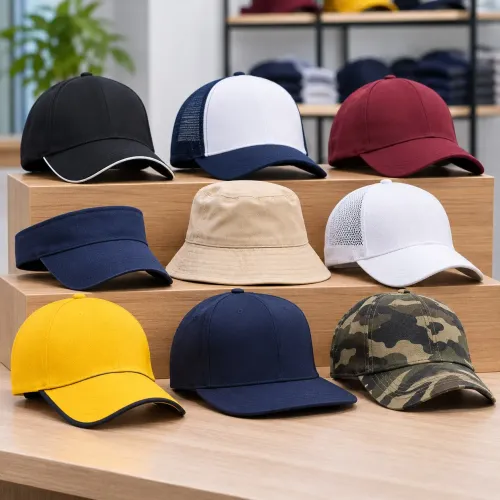
Retail resale needs a cap that looks intentional on a shelf, not merely inexpensive. Ask a cap wholesaler for fabric composition and weight, crown depth, panel count, visor shape, closure, colourfastness, stitching, sweatband, and packaging details before choosing bulk retail caps or reseller caps.
| Buyer and use | Recommended construction | Specify |
|---|---|---|
| Retail resale | Six-panel cotton or cotton-blend cap; structured or low-profile according to the target customer | Consistent colours, durable sweatband, adjustable closure, barcode-ready packaging, and a physical colour standard |
| Promotional distribution | Lightweight five-panel or unstructured cap with plastic snap or hook-and-loop closure | Low decoration cost, comfortable one-size range, placement measured from the centre seam or visor seam |
| Schools | Durable six-panel cap with hook-and-loop or plastic snap closure | Child or adult sizing, washable fabric, secure components, reinforced stitching, and age-appropriate compliance review |
| Sports teams | Moisture-managing polyester, curved visor, and adjustable or fitted construction | Team colour standard, breathable sweatband, colourfastness, crown depth, and decoration that survives repeated washing |
| Institutional uniforms | Structured six-panel cap with metal buckle, hook-and-loop, or fitted sizing | Approved fit sample, stable colour across dye lots, private-label information, required origin, fibre, manufacturer, and care labels |
“One size fits most” does not define usable fit. Approve a physical sample and record finished circumference, crown depth, and closure travel. Lock that construction and colour sample for reorders; thread, fabric, trims, and dye lots can visibly drift. For children’s caps, settle age grading, accessible components, tracking information, and product-safety testing before production.
Build a Wholesale Quote That Shows the Real Unit Cost
A quote showing only wholesale cap prices is incomplete. Ask for the minimum order quantity, price breaks at each quantity, and whether the break applies to the total order or each colour, size, and decoration option.
1. Request separate prices for blank stock, stock caps with decoration, and fully custom production. Confirm setup, digitisation, sampling, patch-making, embroidery or printing, private-label trims, packing, inspection, and handling fees.
2. Get the minimum order quantity for finished caps and for each custom component. Custom-dyed fabric, moulded closures, labels, and cut-and-sew panels can require higher minimums than the finished-goods count.
3. Record the packing basis: caps per carton, carton length, width and height, gross weight, nesting method, individual bags, and pallet details. Crown shape, visor geometry, and packing affect crush damage, carton count, dimensional freight, and warehouse labour.
4. Confirm the delivery term, dispatch location, freight mode, insurance, unloading charges, and who pays GST, duties, and transport. Ask whether the promised date includes artwork approval, sampling, production, inspection, and freight.
5. Calculate landed cost as product cost plus decoration, setup, packing, freight, insurance, taxes, duties, and receiving charges, divided by sellable units. Use the result—not the quoted cap price—to compare quantity breaks.
Recalculate after approving the final colour mix and packing plan. A lower per-cap price can produce a higher landed cost when it creates excess inventory, extra cartons, or a freight surcharge.
Control Custom Branding from Artwork to Repeat Orders
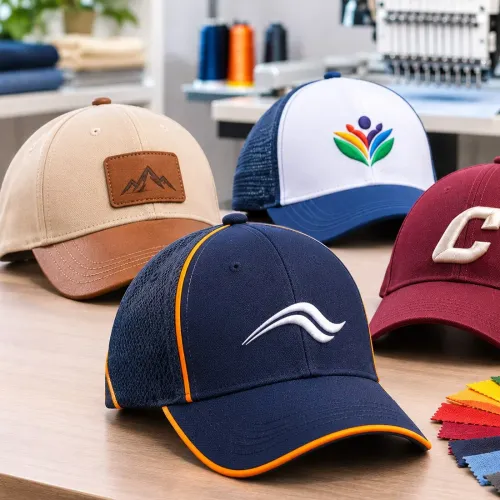
Control it by turning artwork into approved production specifications, not by emailing a logo and relying on a verbal match. For custom branded caps, record the cap style, fabric composition and colour, decoration method, finished size, placement, thread or ink colours, and acceptable tolerance.
Attach scaled artwork with Pantone references, logo clear space, and the exact front, side, or back position.
- Cap embroidery: approve the digitized file, stitch count, thread brand, thread colours, and backing type. Dense fills can pucker lightweight panels; reduce density, simplify lettering, or convert the design to a patch.
- Cap printing: specify screen-print, transfer, or another process, with ink colours, artwork dimensions, curing requirements, and wash-test acceptance. Test polyester for dye migration and cotton for shrinkage or colour change.
- Patches: state woven, embroidered, rubber, or printed construction, edge finish, backing, dimensions, and attachment method.
- Private-label caps: specify label dimensions, material, fold, sewing position, care text, country-of-origin marking, and packaging insert before production.
Approve a preproduction sample made on the actual cap colour, fabric, and decoration process. Sign the sample, artwork file, measurement sheet, and colour breakdown; that approval becomes the repeat-order reference.
Separate blank-cap stock from custom-dyed fabric, closures, labels, and cut-and-sew components in the quotation. The production clock starts after every approval, payment term, and sample sign-off, so require a ship date that identifies digitization, sampling, manufacturing, inspection, and freight. Keep the signed specification with each reorder.
Approve Fit, Packaging, Inspection, and Compliance Before Dispatch
Do not release a bulk cap order until you have approved the physical fit, decorated sample, defect standard, carton data, and labels in writing.
1. Request a preproduction fit sample and a sewn logo sample. Test crown depth, finished circumference, sweatband comfort, visor shape, and closure travel on intended users. “one size fits most caps” is not a usable measurement; specify hook-and-loop, plastic snap, metal buckle, elastic, or fitted construction.
2. Turn cap quality inspection into a signed defect sheet. Classify logo misplacement, exposed backing, skipped stitches, seam failure, incorrect closure, crown distortion, warped visor, stains, wrong colour, and incorrect labels as defects. State cosmetic tolerances separately from functional failures.
If sampling the lot, name the plan and acceptance limits; ISO 2859-1 is a recognised reference for attribute sampling.
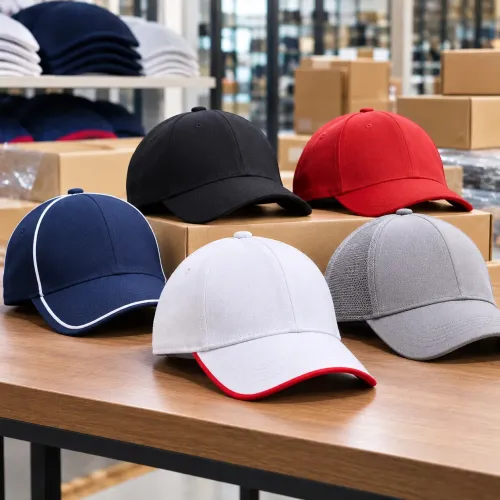
3. Approve cap packaging before production. Record units per polybag and carton, carton dimensions, gross and net weight, barcode format, carton markings, packing orientation, and pallet limits. Ask for a packed-carton sample so crushed visors or loose cartons do not appear at delivery.
4. Check textile labeling before labels are printed. For United States sales, confirm country of origin and the responsible manufacturer or importer identification, plus fibre content and care information where required. A decorative hangtag does not automatically replace a sewn or printed compliance label.
For children’s caps, settle age grading, tracking information, accessible components, and safety testing before sampling.
Choose a Supplier You Can Reorder From Without Stock Surprises
A reliable reorder starts with a supplier that documents what it can repeat, not one offering the lowest first price. Use this cap supplier comparison before approval:
| Supplier type | Strength | Reorder risk to test |
|---|---|---|
| Stock blank wholesaler | Fast replenishment from listed inventory | Colour, closure, and fabric lots can change |
| Custom manufacturer | Controlled construction and branding | Component minimums can exceed order quantity |
| Hybrid supplier | Blanks for urgent demand; custom runs for core items | Two specifications may look different |
Request current stock by colour and size, carton dimensions, gross weight, packing quantity, delivery terms, lead time, decoration fees, and quote expiry. Calculate landed cost, then test the retail cap margin after freight, GST, discounts, defects, and decoration.
Protect colour consistency with an approved physical cap, fabric swatch, thread card, and construction sample. Record fabric composition, dye lot, thread brand, closure, visor, and packaging; Pantone alone cannot control visual differences across cotton, polyester, and thread.
Set the bulk cap reorder around a written trigger:
- Reorder at lead-time demand plus a safety quantity.
- Confirm availability, colour-lot continuity, production slot, and dispatch date in writing.
- Approve a pre-production sample after any fabric, trim, dye-lot, or decoration change.
- Record cartons, tracking details, shortages, and actual arrival date.
A Promotional Cap Manufacturer should identify which components remain standard and which require new minimums before you commit to recurring volumes.
Frequently asked questions
How do you choose cap construction for retail, reseller, and institutional orders?
Match fabric composition and weight, crown depth, panel count, visor shape, closure, sweatband, stitching, and colourfastness to the buyer and use. Retail caps need shelf appeal, while institutional and uniform orders prioritise consistent fit, durability, and easy identification.
What should a wholesale cap quote include?
Request the cap price plus decoration, sampling, packaging, cartons, freight, taxes, setup charges, and any minimum-order costs. Divide the complete delivered order cost by the accepted quantity, not the quantity manufactured.
How can you control custom cap branding from artwork to repeat orders?
Send vector artwork with exact Pantone references, embroidery dimensions, thread colours, placement measurements, and logo clear space. Approve a physical sample or production proof, then retain the approved specifications for repeat orders.
What must you approve before bulk caps are dispatched?
Check fit across the size range, colour and logo placement, stitching, closure operation, packaging, carton labels, and sample quantity. Confirm the purchase order, inspection criteria, delivery documents, and any required compliance records before release.
How do you choose a cap supplier for reliable reorders?
Ask how the supplier records fabric, colour, trim, artwork, measurements, packing, and batch details. Confirm lead times, minimum reorder quantities, material availability, production capacity, and how the supplier handles shortages or specification changes.