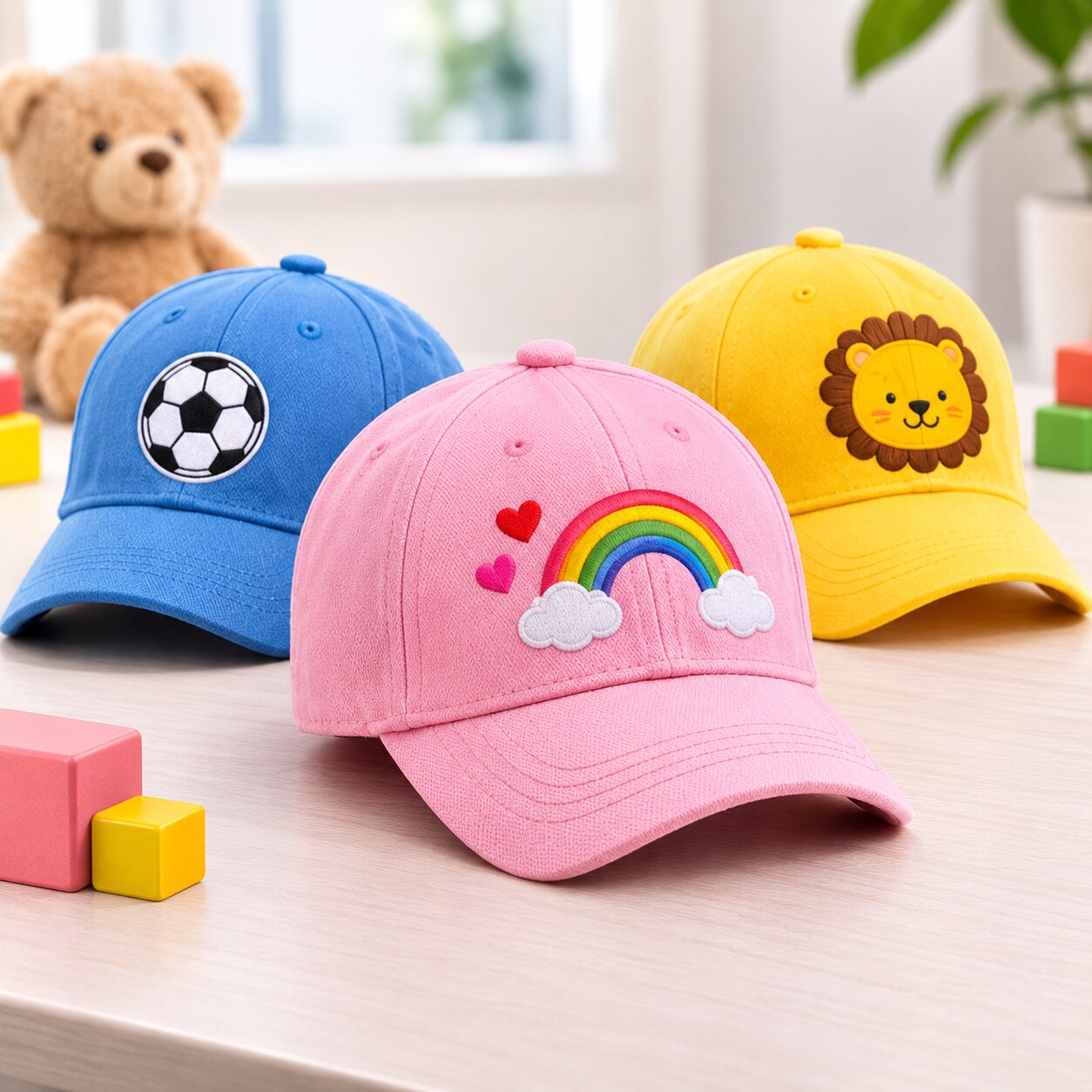
A children’s cap feels lightweight only when its fabric, seams, sweatband, crown, brim and decoration work together; a low fabric weight alone does not guarantee comfort. You will be able to compare materials, measure and test fit, specify construction and compliance details, and verify care performance before placing a bulk order.
Key takeaways
- Choose soft, breathable fabric with ventilation for the child’s activity and climate.
- Measure head circumference and test the cap during movement, not only while seated.
- Specify crown panels, brim flexibility, closure type, seams and wash requirements.
- Check shrinkage, colourfastness, stitching and fit after repeated washing.
What makes a children’s cap comfortable for a full day?
A full-day cap feels light because pressure, heat and friction stay low—not because its fabric has the lowest GSM. A lightweight children’s cap needs crown construction that distributes tension, ventilation that releases heat and a brim that bends without digging into the forehead.
| Detail | Comfortable choice | What goes wrong otherwise |
|---|---|---|
| Crown construction | Smooth inner seams, modest seam allowances and panels that hold shape without stiffness | Bulky seams press the scalp; a collapsed crown traps heat |
| Sweatband and lining | A soft, breathable sweatband; use a cap lining for children’s headwear only when it does not retain excessive heat | Rough edges cause forehead marks, while heavy lining makes the cap clammy |
| Seams and closure | Covered seam allowances, a low-profile rear closure and no exposed hook-and-loop edge | Hard fasteners create pressure at the back of the head |
| Ventilation and brim | Evenly placed eyelets and a flexible, lightly reinforced visor | Poor airflow causes sweat; a rigid brim interferes with movement or vision |
| Decoration | Low-profile printing or restrained embroidery away from pressure points | Dense embroidery and stiff backing add weight and scratch the forehead |
Specify the finished head circumference and adjustment range, not an age label alone. The cap must stay secure while a child walks, runs or looks down, without pressing the temples, covering the ears, obstructing vision or leaving a deep forehead mark.
For school, sports practice and outdoor events, test a sample for ten minutes during movement. A cap that feels fine while sitting can slip, pinch or become hot once the child starts sweating.
Which cap material suits heat, activity and repeated use?
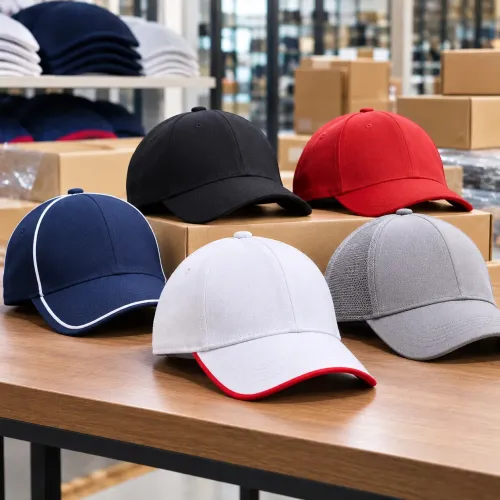
Softness matters most against the forehead, while drying speed matters after sweat or washing. Cotton kids’ caps feel natural and absorbent, but fabric can stay damp, shrink and lose colour faster. Compare the complete cap, not fabric weight alone: a wide sweatband, lining, dense seams or heavy embroidery can trap heat.
| Option | Softness | Drying speed | Durability and colour retention | Heat management |
|---|---|---|---|---|
| Cotton | Softest at first; becomes rougher if repeatedly washed harshly | Slow; holds perspiration | Can shrink, fade and weaken sooner | Comfortable in mild heat, but damp fabric feels heavy |
| Polyester | Smooth rather than plush; choose a soft finish | Fast; moves moisture away from skin | Strong, colourfast and shape-stable | Good for active wear, though a dense weave can feel warm |
| Cotton-polyester blend | Balances cotton softness with polyester’s smoother hand | Faster than cotton, slower than polyester | Resists shrinkage and fading better than cotton alone | Versatile for school and repeated use |
| Mesh | Varies; inspect the face touching the head and the edge finish | Fastest where airflow passes through | Durable polyester mesh holds colour; open holes can snag | Best ventilation for heat, but offers less coverage from sun and wind |
A mesh cap for children suits running or hot outdoor events when airflow is the priority. Polyester children’s caps suit frequent practice and washing; choose cotton for low-intensity wear, or a cotton-polyester blend for one cap serving several uses. Check panel density, eyelets and sweatband width before assuming any option is cool.
How do you measure and test a child’s cap fit?
Take a head circumference measurement with a soft tape held level above the eyebrows and ears, passing around the fullest part of the head. Record centimetres, compare the result with the supplier’s children’s cap size chart, and specify the finished head circumference plus the closure’s usable adjustment range.
Ignore age labels: a cap that reaches its smallest setting but leaves a loose crown, or reaches its largest setting with a tight sweatband, is the wrong pattern.
| Closure | Fit behaviour | Trade-off |
|---|---|---|
| Hook-and-loop closure for children’s caps | Continuous adjustment and quick issuing | Check hair catching, rough edges and lint buildup |
| Plastic snaps | Repeatable sizing at fixed increments | Less fine adjustment; inspect snap pressure points |
| Elastic back | Fast, flexible fitting | Less individual control and possible loosening over time |
An adjustable kids’ cap works only when the crown depth, rear opening and sweatband remain comfortable at both ends of the range. Fit a sample at the smallest and largest settings, then have the child walk, bend, look up and turn the head.
Reject the sample if it:
- Slides over the eyes or blocks side vision.
- Presses the temples, ears or forehead.
- Leaves a deep forehead mark after 10 minutes.
- Exposes a rough seam, stiff embroidery backing or hard closure against the skin.
- Shifts during movement or sits unevenly over the crown.
A secure cap should stay in place without needing a tight setting. Check the child’s final movement test after adjusting the closure, not only while standing still.
What should you specify and verify with a child cap manufacturer?
Put every decision into a bulk kids’ cap specification, not just a logo file. State crown panels, seam position, brim flexibility, sweatband material, ventilation, finished circumference, adjustment range, closure type, fabric composition, colour, decoration method and acceptable tolerances.
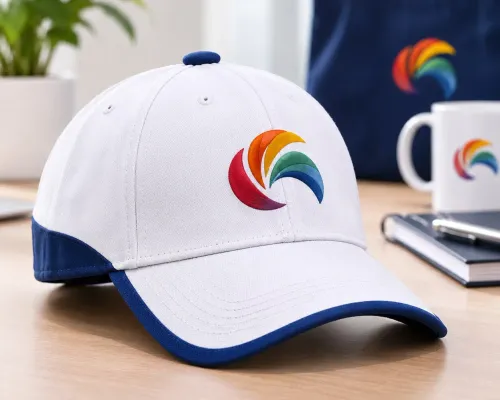
Require a pre-production sample showing the real curved decorated area; flat artwork can cross a centre seam, distort on six panels or disappear beside the visor seam.
For decoration, compare the choices against use and inspection risk:
| Method | Best use | Specify and verify |
|---|---|---|
| Embroidery | Durable logos | Thread colours, minimum line weight, stitch density and distance from seams |
| Screen or transfer print | Fine artwork and light caps | Ink colours, edge tolerance, wash adhesion and cracking |
| Patch or rubber badge | Bold short-run branding | Attachment strength, flexing, phthalate review and edge security |
Ask Promotional Cap Manufacturer for these records before approving the production lot:
- A Children’s Product Certificate cap document covering each applicable test, plus the laboratory report and component or material records behind it.
- CPSIA children’s cap compliance evidence for lead limits and restricted phthalates, including soft PVC badges, rubberized logos, synthetic-leather patches and flexible visor parts.
- Permanent, legible traceability marking on the cap or packaging identifying the manufacturer or private-labeler, production location and date, and batch or run.
- The finished-product configuration and recognized textile test method behind any UPF claim; colour or dense weave alone is not proof.
- Confirmation that ASTM F963 is not being used as a blanket cap certificate, unless attached play features or toy marketing changes the analysis.
Require a retained production sample and batch photographs. That makes replacement orders and defect investigations far easier.
How should children’s caps be washed, tested and managed over time?
Use the cap care label as the operating rule, not a generic laundry habit. Kids’ cap washing instructions should state the tested water temperature, cycle, detergent, drying method, bleach restriction and ironing limit.
A stiffened brim, embroidered logo or adhesive patch can require cold washing and air drying even when the base fabric tolerates warmer treatment.
Approve a pre-wash sample and retain it with the purchase specification. Run the same wash test for embroidered caps that families or staff will use, then compare the sample after five cycles for crown measurements, brim curve, colour change, thread lifting, puckering and logo legibility. Record photographs, wash settings and pass/fail decisions.
Check each production batch against the approved sample before distribution:
- Measure finished head circumference, crown height and brim length.
- Inspect seam alignment, closure operation and loose threads.
- Compare fabric, thread or print colour under consistent lighting.
- Flex the brim and examine embroidery for cracking, peeling or distortion.
- Pull-test attached badges, toggles, pompoms and appliqués, especially for children under three.
Specify colourfast children’s headwear with a retained colour standard, decoration artwork showing its permitted distance from seams and edges, and an agreed tolerance for shade and logo position. Track issued quantities by size, colour, decoration version and batch number.
Keep a reserve by size based on actual replacements, and reorder against the same approved sample rather than an age label or memory.
Frequently asked questions
What makes a children’s cap comfortable for a full day?
Low pressure, breathable construction, smooth seams, effective ventilation and a flexible brim help reduce heat, friction and forehead discomfort.
Which cap material suits heat, activity and repeated use?
Choose breathable, quick-drying fabric for heat and active use, then compare it with cotton blends or durable synthetics based on drying time, softness and wash resistance.
How do you measure and test a child’s cap fit?
Measure the child’s head circumference above the eyebrows and ears, compare it with the adjustable size range, and test the cap during walking, running and bending.
What should you specify and verify with a child cap manufacturer?
Specify fabric, crown construction, ventilation, brim dimensions, closure, decoration method, size range, colour and washing requirements. Verify samples, measurements, stitching and finish before bulk production.
How should children’s caps be washed, tested and managed over time?
Follow the care label, test shrinkage and colourfastness, inspect seams and closures after washing, and replace caps when fit, structure or hygiene declines.