The right corporate cap depends on whether people will wear it every day, for one event, in field conditions or as part of a safety uniform. By the end, you will be able to specify the construction, fabric, decoration, sizing, artwork and quality checks needed for a consistent bulk order.
Key takeaways
- Choose cap construction based on shift conditions, movement and exposure.
- Match fabric weight, colour and logo placement to the existing uniform.
- Select embroidery, print or patches according to detail and wash demands.
- Approve a written specification, size breakdown and pre-production sample before ordering.
Define the job before choosing the cap construction
A corporate uniform cap should match the wearer’s shift, movement and exposure, not just the company logo. Choose a stable construction for employee uniforms used repeatedly, and a lighter, faster-to-specify format for short campaigns.
Use these starting points:
| Use case | Suitable construction | Why it fits |
|---|---|---|
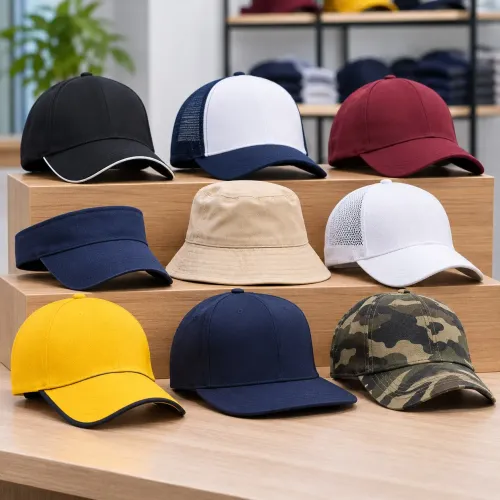
| Daily staff wear | Six-panel, structured or lightly structured crown; curved brim; adjustable strap; solid cotton-polyester blend | Holds its shape, gives embroidery a stable front and remains comfortable through repeated wear |
| Temporary event staffing | Five-panel or six-panel unstructured cap; curved brim; adjustable closure; cotton or lightweight polyester | Keeps event staff caps light, easy to distribute and economical for short-term use |
| Outdoor field teams | Structured six-panel cap; curved brim; polyester or mesh-back construction; adjustable closure | Supports quick drying and ventilation while keeping the logo visible during movement |
| Security personnel | Structured six-panel cap; solid back; curved brim; secure metal or fabric closure | Presents a consistent, formal profile and avoids excessive exposure of the scalp or decoration backing |
| One-day campaign | Five-panel, unstructured cap; adjustable snapback or hook-and-loop closure; lightweight fabric | Fits mixed groups quickly and suits high-volume handouts without fitted-size management |
Specify the finished crown profile, brim curvature, closure type, eyelet count, sweatband and size range. Treat flat-brim caps as a separate format: the brim changes logo visibility and the usable embroidery field.
- Approve a physical sample before bulk production.
- Set tolerances for logo position, crown shape, colour variation and rejects.
- Do not describe reflective trim as replacing a compliant high-visibility vest or jacket.
Match the fabric, colour and logo area to the uniform
Choose fabric and colour together, then size the logo for the finished cap rather than a flat artwork file. Cotton caps suit softer indoor uniforms, polyester caps dry faster for active teams, a cotton-polyester blend balances comfort and durability, and mesh panels improve airflow in hot outdoor work.
- Match the cap shade to the uniform under daylight and indoor lighting; a brand colour that looks exact on screen can shift in dyed fabric or embroidery thread.
- Request a physical fabric swatch and approve an acceptable shade range before production.
- Use strong contrast between cap and logo. White on navy, black on white, and dark thread on pale fabric remain easier to read than close tonal combinations.
- Avoid placing small text across a front-panel seam, eyelet or curved edge.
Specify the finished crown profile, brim curvature, closure type, eyelet count, sweatband construction and size range. A structured six-panel cap offers a steadier embroidery field than an unstructured crown, while a curved brim changes perceived logo position compared with a flat brim.
Provide vector artwork in AI, EPS or editable PDF format, with fonts converted to outlines. State the finished logo width and height, thread or print colours, minimum line thickness, clear space and permitted position tolerance.
Have the artwork digitized against the actual cap pattern, then approve a decorated reference sample; a flat logo template can produce puckering, distortion or hidden lettering on the finished cap.
Choose decoration by durability, detail and wash requirements
Choose embroidered corporate caps for a stable, frequently washed uniform, but do not assume embroidery is always the strongest option. Dense thread fills can stiffen a lightweight crown and create puckering, especially around seams or on performance fabric. Approve the digitized file and a physical decorated sample on the actual cap pattern.
| Decoration | Best use | Main risk |
|---|---|---|
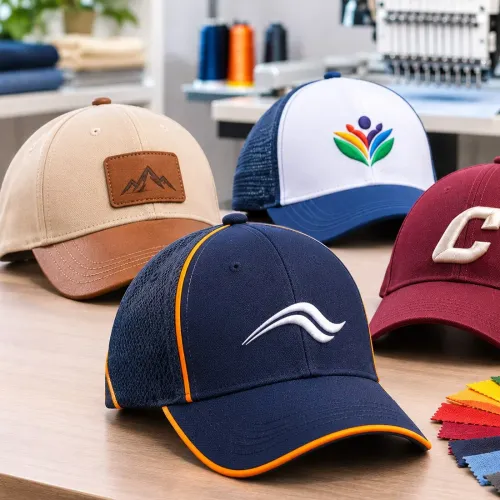
| Embroidery | Simple logos on structured six-panel fronts; daily staff or security wear | Dense stitching can distort fabric, expose backing or reduce comfort |
| Screen printing | Broad, flat artwork with few colours on suitable fabric panels | Ink coverage and alignment suffer on curved or textured surfaces |
| Heat transfer | Fine detail, gradients, names or short event runs | Heat, washing and flexing can cause cracking or delamination |
| Woven patches | Small lettering, fine outlines and gradients needing a defined edge | Added thickness, visible attachment stitching and possible edge lifting |
Use screen printing when the logo is large and uncomplicated, and heat transfer when artwork detail matters more than maximum wash life. Woven patches reproduce small text more reliably than thread, while embroidery suits bold marks that need a traditional uniform appearance.
Validate care instructions on the finished decorated cap, not the blank cap specification. Heat transfers, adhesive patches and metallic trims can require hand washing, low-temperature drying or no ironing; covered textile products sold in the United States need care labels under the FTC Care Labeling Rule.
Approve brand colour from a physical sample under normal lighting.
Set sizing, comfort and care requirements for mixed teams
Measure each wearer’s head with a flexible tape around the fullest part of the head, above the ears and across the middle of the forehead. Record the measurement in centimetres or inches; do not rely on an employee’s usual small, medium or large label.
Adjustable cap closures give mixed teams a wider usable range, while fitted cap sizes require quantities based on the recorded measurements and the supplier’s size chart.
Check comfort on a physical sample before ordering. Have employees with small, average and large measurements wear it for at least 30 minutes, then inspect pressure at the temples, crown height, sweatband contact and brim visibility.
Approve one reference sample and define tolerances for crown shape, closure position and logo placement so later production does not change the fit.
Write cap care instructions from the finished decorated cap, not the blank-cap specification. Wash-test embroidery, heat transfers and patches through the intended cycle; decoration can require hand washing, low-temperature drying or no ironing even when the fabric permits machine washing. State water temperature, cycle, detergent, drying method and ironing restrictions on the supplied instructions.
For covered textile products sold in the United States, provide the care information required by the FTC Care Labeling Rule. Recheck moisture-wicking performance and transfer adhesion after laundering.
Turn the specification into a controlled bulk cap order
Approve production only after the corporate caps manufacturer signs one controlled specification tied to a physical approved reference sample. Digital artwork and a Pantone code cannot prove the finished thread, ink, transfer film, fabric colour or logo placement will match.
1. Attach the approved reference sample and record cap construction, fabric, colour, decoration method, logo locations, logo dimensions and packaging format. Define production tolerances for logo position and size, crown shape, stitching, shade variation and adjustable hardware.
2. Require a pre-production decorated sample for written approval. Keep it with the purchase record, because a supplier can meet the nominal style while separate blank-cap, decoration and packing operations create inconsistent lots.
3. Specify carton labels, inner-pack quantities, purchase-order numbers, country of origin and treatment of overruns, shortages and rejects. For US distribution, approve the sewn label showing fibre content, manufacturer or dealer identity and country of origin before cutting begins; the origin must also appear as required by US Customs rules.
4. Name each destination market and obtain evidence for relevant hardware. For EU sales, assess nickel release from metal adjusters, eyelets and other parts touching skin under REACH Annex XVII. For children’s caps, require lead, phthalate and tracking-information review; do not use an adult specification.
5. Exclude claims that a reflective cap replaces an EN ISO 20471-compliant vest or jacket. A Promotional Cap Manufacturer should also record carton markings and inspection results against the approved reference sample before dispatch.
Frequently asked questions
How should you choose a cap construction for employee uniforms?
Choose a stable construction for repeated uniform use, and a lighter format for short campaigns. Base the decision on shift length, movement and exposure.
How do you match a corporate cap to an existing uniform?
Compare fabric weight, colour and logo area with the shirt, jacket or other uniform pieces. Check that the cap suits the work environment and brand system.
Which logo decoration method is best for corporate caps?
Choose embroidery, printing or patches by the logo’s detail, required durability and washing conditions.
What should a bulk corporate cap order specification include?
Record construction, fabric, colour, logo method and placement, sizing, comfort requirements, care instructions and the quantity for each size. Approve a pre-production sample before manufacture.