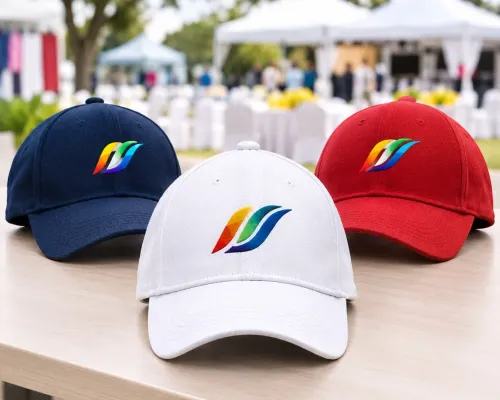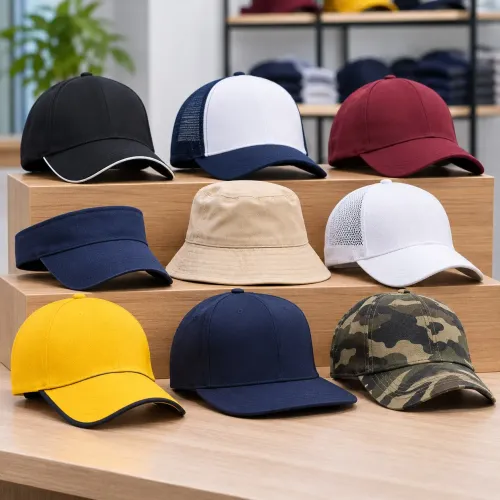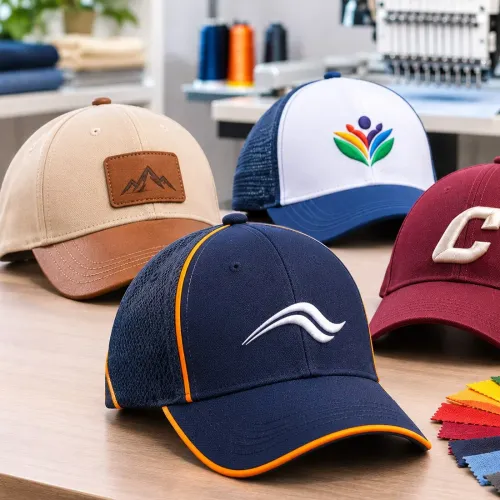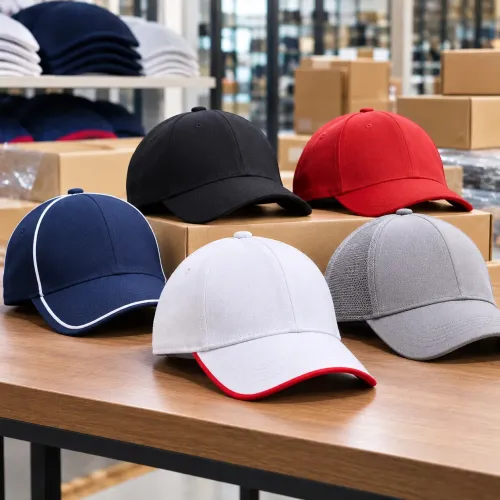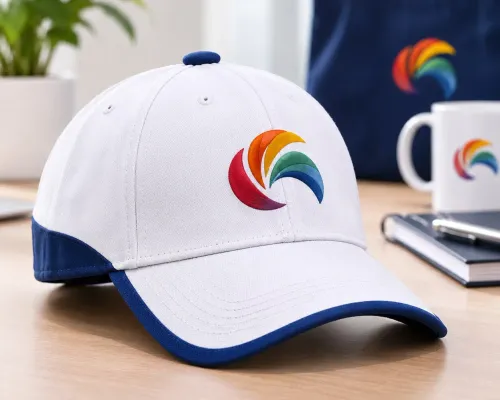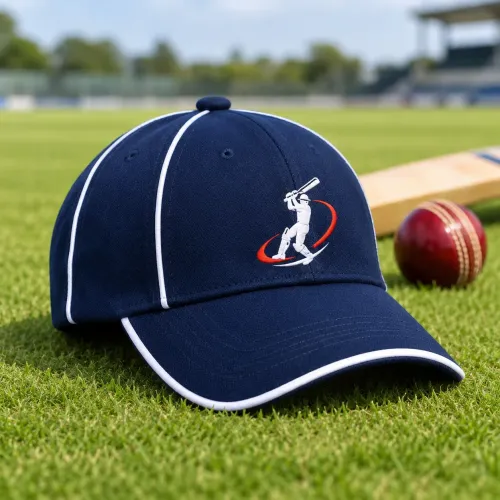
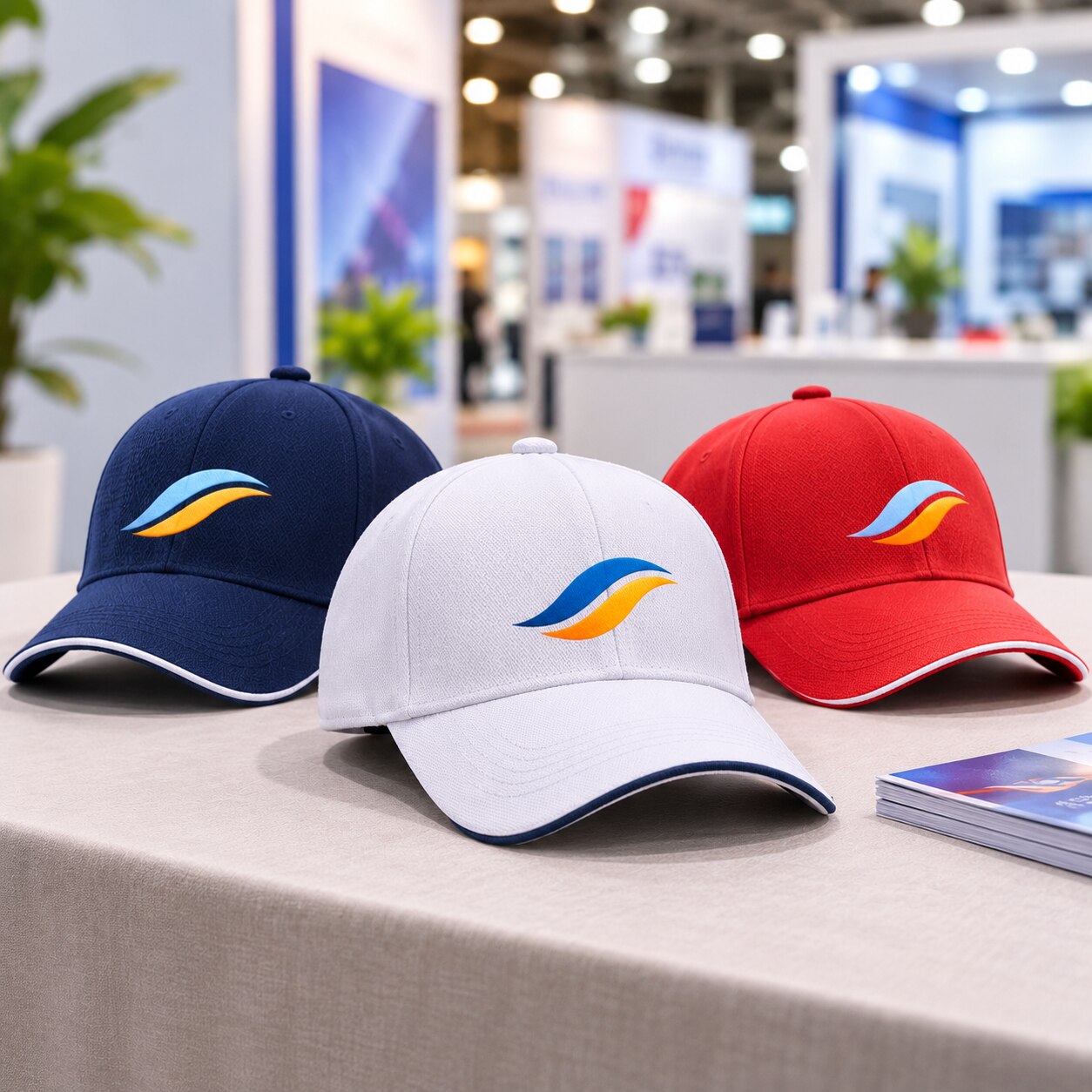
The best cap for a launch team is not always the best cap for a booth giveaway: construction, decoration method, fabric, fit and order quantity all change the result. By the end, you will be able to match each cap to its audience, approve artwork that can be produced cleanly and build a schedule that leaves time for sampling and inspection.
Key takeaways
- Use structured caps for staff and unstructured caps for high-volume giveaways.
- Choose fabric and colour based on heat, wear, stains and brand guidelines.
- Match embroidery, screen printing or transfers to artwork size and detail.
- Add approval, production and delivery time before setting your event deadline.
Match the Cap Construction to Its Event Role
Give launch staff and media-kit recipients the cap that looks consistent after repeated wear; give visitors and mass handouts the cap that fits the widest range with the least handling.
| Construction | Best event role | Trade-off |
|---|---|---|
| Structured six-panel baseball caps | Launch teams, staff uniforms, photographs | Front logo holds its shape, but seams can interrupt artwork |
| Structured five-panel caps | Staff, media kits, prominent front branding | Strong presentation; a seamless front gives the cleanest print field |
| Unstructured caps | Casual giveaways and relaxed exhibitions | Softer, less uniform appearance and weaker crown support |
| Trucker caps and mesh-back caps | Outdoor events and summer handouts | Airflow improves comfort, but foam fronts and synthetic mesh need decoration testing |
Choose a five-panel seamless front when artwork needs one uninterrupted print field. Use an unstructured crown for a casual brand impression; choose structure when the logo must stay flat and readable in photographs.
Adjustable snapback, hook-and-loop and buckle closures simplify mixed-size giveaways. Fitted closures create a cleaner uniform appearance, but you need reliable head-size data and an exchange plan.
Assign premium, repeated-wear promotional printed caps to launch teams, staff uniforms and media kits. Reserve simpler adjustable baseball caps or five-panel caps for booth visitors, customers and high-volume handouts, where fit flexibility matters more than long-term polish.
For outdoor use, confirm that the trucker cap’s foam front and mesh-back cap’s synthetic mesh tolerate the planned printing or transfer process.
Choose Fabric, Colour and Durability for the Setting
Choose fabric by balancing the cap’s expected wear against comfort, appearance and price. Cotton caps feel soft and familiar; polyester caps dry quickly, hold colour consistently and suit sublimation; blended fabric caps combine cotton comfort with polyester performance; mesh caps improve airflow in hot outdoor settings.
| Option | Main advantage | Best setting |
|---|---|---|
| Cotton caps | Soft hand feel and familiar appearance | Customer wear and indoor events |
| Polyester caps | Quick drying, consistent colour and sublimation | Outdoor teams and photographic branding |
| Blended fabric caps | Compromise between comfort and performance | Repeated general use |
| Mesh caps | Ventilation and lower heat retention | Outdoor giveaways and summer exhibitions |
Choose white or another light colour when heat, photographic visibility or sublimation matters. Select dark colours when stains and strong brand contrast matter, but specify a white underbase before coloured ink on dark cotton or polyester; white ink is not automatically opaque.
For a durable staff or customer cap, inspect fabric weight, sweatband construction, crown shape retention and closure quality—not only the logo. For a one-day giveaway, lighter fabric and simpler hardware can reduce cost without undermining the exposure.
Test the decorated sample using the planned care instructions. Check heat, machine drying, solvent exposure and aggressive brushing, because they can damage ink, transfer edges, laminated fronts and shape.
Match the Decoration Process to the Artwork
Choose screen printing on caps for economical larger runs with bold, limited-colour artwork, but check the real panel pattern before approving production.
| Method | Best artwork | Main risk or limit |
|---|---|---|
| Screen printing on caps | Bold, limited-colour logos | A six-panel seam can interrupt the design; a five-panel seamless front gives a cleaner field |
| Heat transfer caps | Short runs, names, photographs and multicolour logos | Film edges, wrinkles, seam bridging and edge lift on curved crowns |
| Embroidered caps | Simple, bold marks needing strong wear resistance | Dense stitching can pucker lightweight fronts and distort tiny lettering |
| Digital cap printing | Gradients, photographs and fine multicolour artwork | Crown height, bill angle and platen support can cause blur or tilted placement |
| Sublimation | White or light polyester | It cannot conventionally colour cotton or dark caps |
Heat transfer caps suit variable names, but keep large transfers inside the flatter panel area. A transfer that crosses a seam can bridge it and lift after handling.
Use embroidered caps for durable symbols, not gradients, photographs, tiny text or mesh-front designs. Use direct cap printing only after testing the finished crown, bill angle and platen fit; poor support produces uneven ink deposition.
Reserve sublimation for white or light polyester. Treat metallic, fluorescent, reflective and high-density effects as tested ink systems, not ordinary colour changes.
Specify these production limits in writing:
- Minimum stroke width and letter height
- Exact position: front, side, back, bill or underbill
- Artwork proof matched to the actual panel pattern
- Physical sample for large transfers, curved placement or effects
A high-resolution file cannot rescue lettering that is too small for the chosen process.
Calculate Quantity Without Running Short or Overordering
Order against two numbers: confirmed attendees or expected handout volume. Then build the promotional cap quantity by recipient group instead of applying one unexplained percentage.
- Allocate separate quantities for launch staff, booth staff, presenters, photographers, media kits, customers and general visitors. Treat staff uniform caps as a different line from mass giveaway caps.
- Add replacement stock for damaged, misplaced or heavily handled caps. Create a separate reserve for late registrations and walk-ins; do not combine both allowances under one percentage.
- Match the fit plan to the closure. Adjustable versus fitted caps matters: snapback, hook-and-loop and buckle closures reduce size risk, while fitted caps require head-size counts and a clear exchange plan.
- Record every quantity by cap style, colour, closure, decoration position and recipient group. A premium structured cap for presenters may not substitute for a lighter adjustable cap intended for visitors.
- Check the leftover plan before approving production. Confirm whether unused stock can be stored, reissued or packed for another event.
For a mixed event, do not assume every cap can serve every role. Premium staff caps may use different fabric, fit and decoration specifications from high-volume giveaway caps, and moving stock between groups can leave the people who need a particular size or finish without one.
Include the storage and reissue decision in the event giveaway planning record.
Build the Approval, Production and Delivery Timeline
Set the event date first, then build the event delivery schedule backward so production and inspection finish before venue intake.
1. Reserve time for artwork cleanup. Correct low-resolution logos, convert colours to the agreed production specification, remove hidden layers and confirm the final decoration size.
2. Approve placement on the actual cap pattern, not a generic flat mock-up. Seams, eyelets, sweatbands and bills create hard boundaries that affect coverage and registration.
3. Complete custom cap sampling when artwork crosses panels, wraps toward the bill, uses a large transfer or depends on colour matching. Request a physical sample, not only a digital proof.
4. Test the sample before bulk approval. Wash or handle it using the intended care label; heat, machine drying, solvents and aggressive brushing can expose ink adhesion, transfer lift, shape loss and edge damage.
5. Confirm the material controls. For polyester, request low-bleed inks, blocker layers and controlled curing. For foam-front trucker caps, require tested temperature, dwell-time and pressure settings to prevent scorching, flattening or mesh distortion.
6. Release bulk cap production only after the sample passes and the quantities are separated by recipient group, colour, size and decoration.
7. Complete cap quality inspection for tilted logos, blurred edges, seam interference, puckering, dye migration, transfer lift, broken stitching, closure faults and inconsistent colours.
8. Pack labelled event quantities, protect decorated surfaces and confirm venue access, delivery contact and unloading instructions. Promotional Cap Manufacturer becomes useful when it documents each approval, coordinates inspection and manages delivery instead of treating every cap as an identical blank.
Frequently asked questions
Which cap construction suits staff, media kits and mass giveaways?
Use structured caps when staff and media-kit recipients need a consistent shape after repeated wear. Choose unstructured caps for visitors and mass handouts when flexible fit and quick distribution matter.
How should you choose cap fabric, colour and durability?
Assess the event setting, expected wear, stain exposure and brand colour requirements before selecting fabric and colour. Match durability to whether the cap is worn once or used repeatedly.
Which decoration process fits detailed or simple artwork?
Match the process to the artwork: embroidery suits raised, durable logos; screen printing suits larger simple graphics; transfers suit detailed artwork and smaller runs.
How do you calculate the right number of promotional caps?
Estimate staff requirements separately from visitor giveaways, then add a controlled reserve for size preferences, late arrivals, replacements and distribution losses. Compare the reserve with the cost of overordering.
How much time is needed to approve and deliver printed caps?
Allow time for artwork checks, sample approval, production, quality inspection, packing and transport. Set the supplier deadline before the event date rather than the day caps are needed.